Risk and Reward in Gamification

Risk and Reward Risk and Reward in Gamification

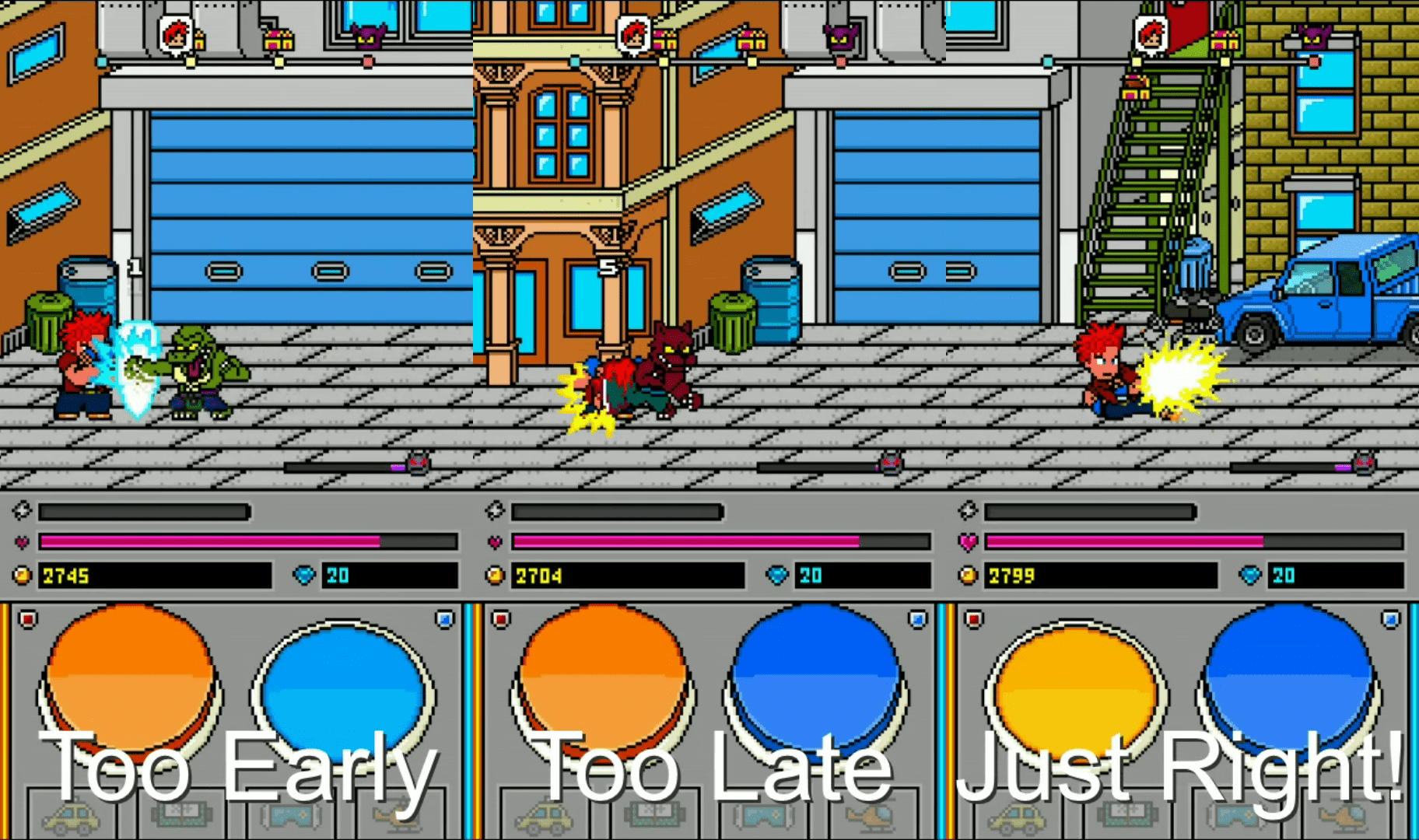
Recently I have been playing a game called Punch, Punch, Kick, Punch (PPKP). It is a simple mobile game that only requires 2 buttons to play. One is kick, one is punch. As you play, you have to learn how to time the use of these buttons and the combinations that are most effective against certain foes. The reason I mention it is because it has one of the simplest examples of risk and reward in a game I have seen for a while.

What is risk and reward I hear you cry.. or maybe not, but I’ll explain anyway. It is the idea that if the more you are willing to risk, the higher the reward might be. For instance, the more lotto tickets you buy, the more chance you have of winning – but it costs more, the risk is higher as you have spent more. Read More ...

Reward Excellence not Mediocrity and Expectation

When designing a reward system, it is easy to be tempted to reward everything!

  • “Hey, you clicked on a button – woot”.
  • “Awesome, you clicked that button twice, go you!”
  • “OMG, you clicked that button 10 times now, you are the button king – have the button king badge!!!!!”

The trouble with this is it devalues rewards very quickly. I have written in depth about rewards and badges before, so won’t go into it here. What I want to put over in this short post, is the need to reward the right things and congratulate others.

Take my daughters school and a previously mentioned issue I have around them rewarding kids for attendance.  100% attendance = a  reward of no homework for a week and a certificate. The issue here is the children being rewarded are 99% of the time not in control of their attendance. It is down to illness or parents taking them out of school for various reasons. It also highlights those who are unable to maintain 100% for reasons out of their control and could turn the class against them. Read More ...

Optimal Experience in Gamification

In gamification, we often speak about Mihály Csíkszentmihályi’s Flow, a quick search of my site will bring up more than few posts on the topic. However, as I have pointed out before, we are not really talking about Flow but rather “Optimal Experience”.

We speak about one very specific part of Flow, that of balancing challenge against skill. As a quick refresher, one of the key conditions for Flow to occur is the perceived level of challenge must not exceed or fall below the persons perceived level of skill. If it exceeds it, the person will become frustrated at the difficulty. If it falls below, they will quickly become bored. Read More ...

Ethics in Gamification

I was recently asked to write an article on the ethics of gamification for the ACM’s student publication XRDS. Here it is! It should  download a PDF. I would love to hear your thoughts 🙂

The ethics of gamification

Andrzej Marczewski XRDS: Crossroads, The ACM Magazine for Students, 2017

frames are not supported If the ethics of gamification are of interest to you, why not sign up to the Open Gamification Code of Ethics?

A Challenge for My Readers – Micro Story Telling

It has been weeks since I last spoke about narratives and stories. I just wanted to pass a thought by you that fits in nicely with my stuff on Narrative Atoms and to set you a challenge. I saw a great article thanks to Rob Alvarez, Bucholska that had something very similar – 2 sentence horror stories.

This fit in brilliantly with something I had done recently, so got me to thinking. How much story can you fit on a post-it note? How much text do you need to create a story in the minds of your users/readers? Read More ...

Exit mobile version