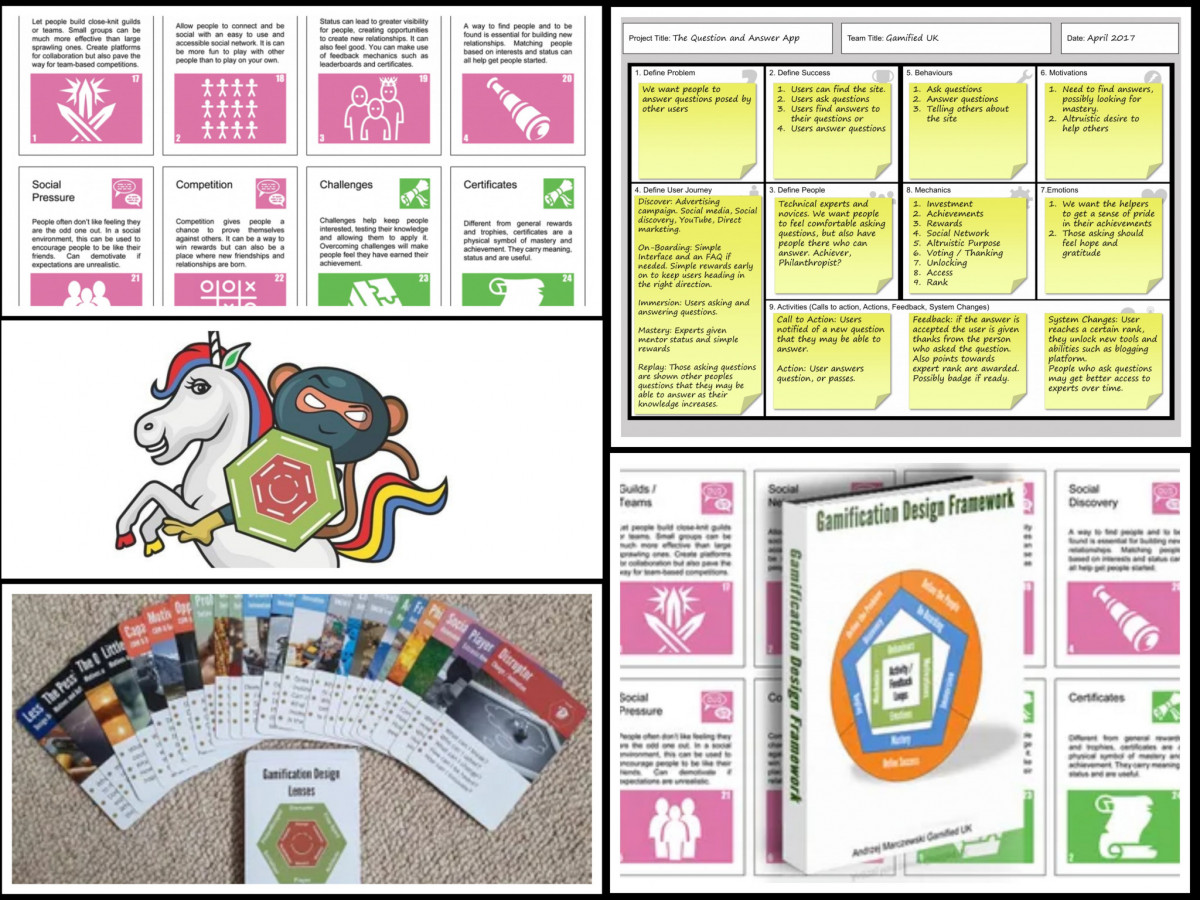
The Gamified UK Value Pack for ONLY £9.99

Collage The Gamified UK Value Pack for ONLY 9 99

Act Fast and Get Over £50 Worth of Gamification Content and Tools for ONLY £9.99! Become a Gamification Pro with the Ninja Monkeys Unicorn Edition eBook and Other Premium Content Included in This Bundle. Don’t Miss Out on This Incredible Offer – Start Building Your Gamified Solutions Toda

This bundle includes all of my premium content.  Even Ninja Monkeys Unicorn Edition eBook (which contains some content, not in the normal retail versions), Gamification and Solution Design Lenses, Inspiration Cards and my Gamification Framework Design Toolkit Read More ...

SOAP Atoms: Designing Stories That Help People Keep Going

Narrative is one of those things people love to overcomplicate. Give someone the word “story” and they immediately reach for epic arcs, heroes, destinies, and some poor character being forced to fundamentally transform themselves by Act Three. That’s all very well if you’re writing films, but it’s far less helpful if you’re designing experiences for real people, in real contexts, on real days where they’re tired, distracted, and just trying to get through.

Over the years, I’ve talked a lot about Narrative Atoms and the Soap Hero’s Journey. They came from the same place: a frustration with big, monolithic narratives that look great on slides and fall apart the moment they meet reality. Read More ...

The Measurement Manifesto

Whilst I was working on the Dynamic Narrative Analytics  framework, I started writing this little manifesto. I thought I’d share it with you.

If you can’t measure it, you can’t trust it. If you can’t understand it, you can’t learn from it. If you can’t explain it, you can’t justify it.

Failure so often starts when opinion is presented as evidence and instinct is defended as proof. “I think” gets conflated with “I know” long before it earns that right. Real progress is a transition. From I think, to I know, to you know and you trust that I know. That transition does not come from more data. It comes from the right data and better measurement. Read More ...

The Cost of Cute: When Your Gamification Stops Serving Its Purpose

Recently my friend David Chandross wrote a great post about how serious games often miss their purpose, becoming more game than serious if you will. That it’s becoming less and less about the learning. That inspired me to reemphasise something I wrote about a while back.

Gamification should help people do things better. That’s it. But somewhere along the way, too many designers decided that the point was to make people play their systems, rather than benefit from them.

It’s easy to spot. You open an app or a training program and you’re immediately pulled into some shiny loop of collecting things, hitting targets, and chasing streaks. The problem is, you’re no longer learning or improving, you’re just playing. The system has become the goal. Read More ...

Your Cart Abandoned You For a Reason

Abandoned cart emails are one of those things that sound almost too obvious. Someone puts a shiny new kettle in their basket, forgets about it, and you gently nudge them a day later with an email that says: “Hey, you forgot something.” Simple. Effective. And for retailers, often the lowest-hanging fruit on the tree.

But then, a few days later, things get weird. Suddenly, the kettle has developed friends. Now your inbox is full of toasters, microwaves, sandwich makers, and possibly even a smug little milk jug. Somewhere in the retailer’s system, a switch has been flipped from “remind” to “relentless.” Read More ...

Dynamic Narrative Analytics: Turning Player Data Into a Playable Story

One of the greatest lies we’ve told ourselves in gamification (and business in general) is that numbers speak for themselves. They don’t.

Numbers sit there, mute and smug, like a cat perched on a bookshelf—daring you to make sense of them. And like a cat, they’ll let you project whatever meaning you want onto them… until you get scratched.

That’s where Dynamic Narrative Analytics (DNA) comes in.

This isn’t about algorithms. It’s not about drowning in dashboards. It’s about recognising that every dataset tells a story—and if you don’t write the story, someone else will (probably in PowerPoint, with clip art). Read More ...

Exit mobile version