Play Games, Enjoy Games and be a Better Gamification Designer

Video game 2154473 Play Games Enjoy Games and be a Better Gamification Designer

Over the year my opinion on the need to love games to be a good gamification designer has fluctuated. In the early days, I was more flexible on the idea. It was all about psychology in a nearly pure form, understand behaviour and use that understanding to encourage the behaviours that you want. The “game” aspect was less important as gamification is not making games!

However, as I work on more and more projects it becomes clear that this is rubbish. Anything beyond the most simple of applications of gamification needs a solid understanding of games. It is not necessary to be a games designer as such, but having a good idea of what makes games work is an essential. If I was not a gamer, I would not be able to do my job at this level! I would have no inspiration for a start. After that, I would have no idea what worked and why. Finally, I would not have the love of play that is so desperately needed in good gamification implementations. Read More ...

What You Want vs What You Need

My JuJitsu instructor always used to say,

“I’ll teach you what you need, not what you want”

This always struck me as a fabulous way to look at teaching in general and one that I used myself as a JuJitsu instructor, mentor and everything else I have done that involved passing information to others.

Getting what you want is very rarely as important as getting what you need. In fact, getting what you need more often that not allows you to then earn what you want. In martial arts, like most things, you need the foundations, the boring things. The form work, the katas, the hours and hours of repetitive grind. The same is true in games. You need to get the basics before you can do the interesting things. You may not want to do them, the tutorial level is often not the most exciting, but you need them to be able to then go on and do what you want to do in the rest of the game. Read More ...

Risk and Reward in Gamification

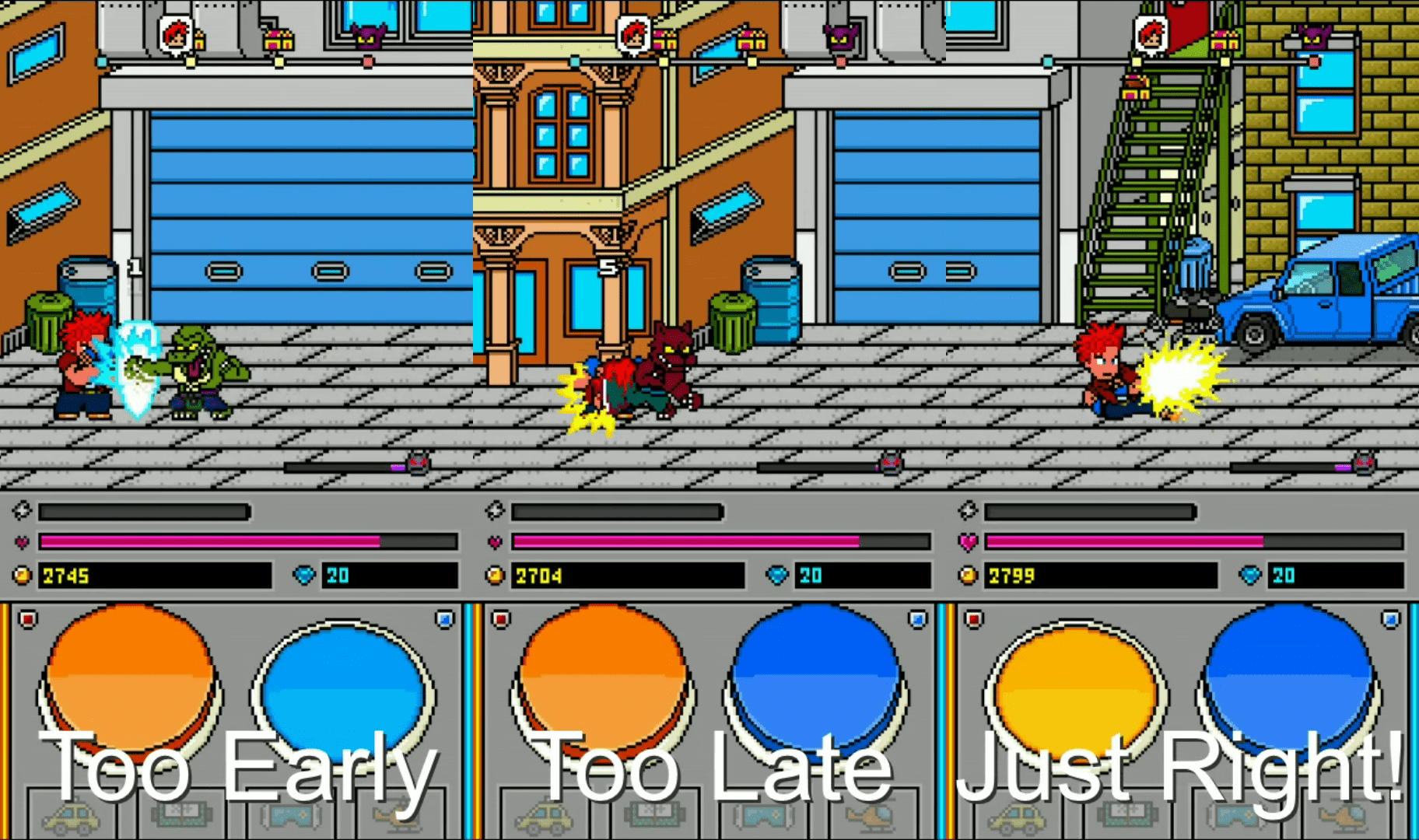
Recently I have been playing a game called Punch, Punch, Kick, Punch (PPKP). It is a simple mobile game that only requires 2 buttons to play. One is kick, one is punch. As you play, you have to learn how to time the use of these buttons and the combinations that are most effective against certain foes. The reason I mention it is because it has one of the simplest examples of risk and reward in a game I have seen for a while.

What is risk and reward I hear you cry.. or maybe not, but I’ll explain anyway. It is the idea that if the more you are willing to risk, the higher the reward might be. For instance, the more lotto tickets you buy, the more chance you have of winning – but it costs more, the risk is higher as you have spent more. Read More ...

Optimal Experience in Gamification

In gamification, we often speak about Mihály Csíkszentmihályi’s Flow, a quick search of my site will bring up more than few posts on the topic. However, as I have pointed out before, we are not really talking about Flow but rather “Optimal Experience”.

We speak about one very specific part of Flow, that of balancing challenge against skill. As a quick refresher, one of the key conditions for Flow to occur is the perceived level of challenge must not exceed or fall below the persons perceived level of skill. If it exceeds it, the person will become frustrated at the difficulty. If it falls below, they will quickly become bored. Read More ...

The Trouble With Types

Player Types and User Types, I’m not gonna lie, I love ’em. I imagine that is obvious considering I have spent so long making my own!

However, it’s time for a bit of a tidy up of misconceptions about types –  a misconception my love of them may even have helped to perpetuate.

Misconceptions

Bartle has 4 Player Types

Actually, he has 8. He realised there were limitations and duality in his 4 types, so he created a set of 8 that accounted for this. https://mud.co.uk/richard/selfware.htm

Everyone is Just One Type

No matter what model or taxonomy you use, the likelihood is this is just not true. We probably display all types in our personality, just in different amounts and in different contexts (more on that in a moment) Read More ...

Exit mobile version