


I love statistics. They are wonderfully effective at hiding the truth.
Gamification has been especially guilty of this over the years. We have all seen the headline:
“82% increase in engagement after gamification was introduced.”
It sounds impressive. On its own, it means almost nothing.
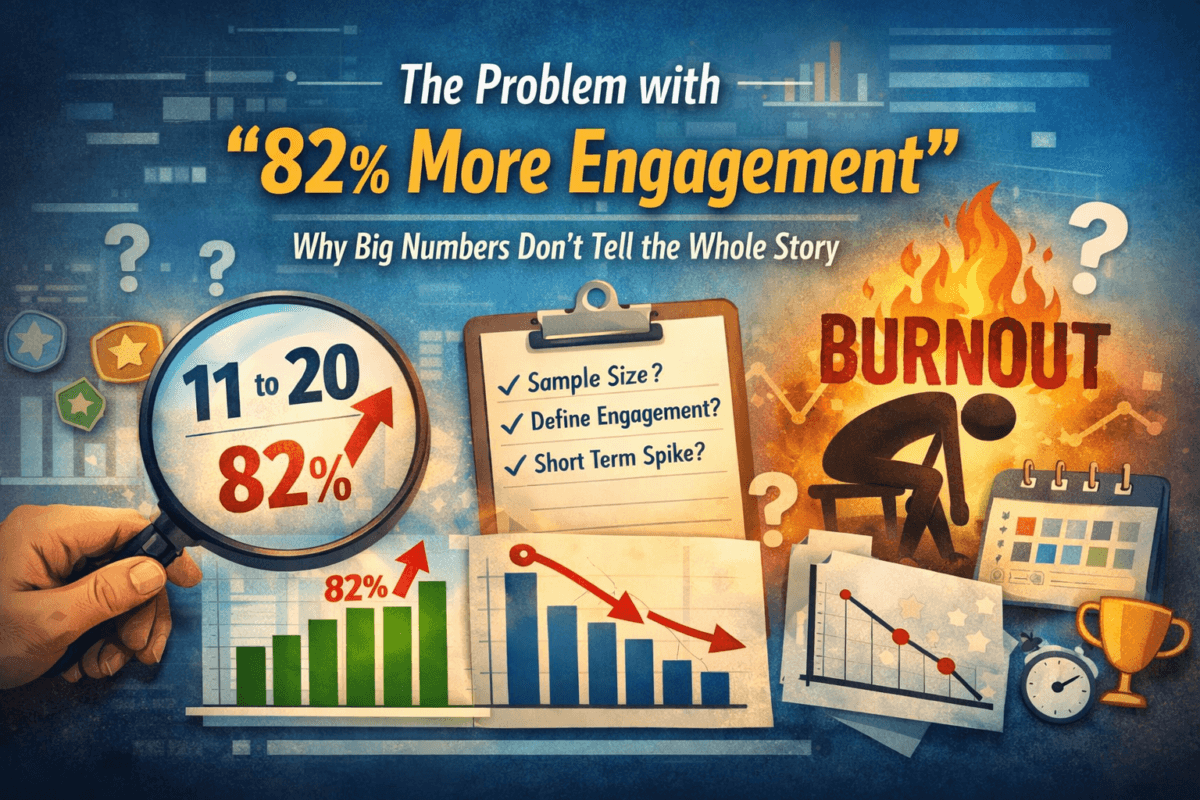
An 82% increase could mean engagement went from 11 people to 20 people. That is a real improvement, but it is hardly the same as the grand transformation the headline suggests. If the programme only involved 50 people, the number looks even less dramatic once you see the actual scale.
Then there is the obvious question: what is being measured? In gamification, “engagement” is often treated like a magic word, despite being vague enough to mean almost anything. Did people log in more often? Click more buttons? Post more comments? Or did they actually contribute more value, learn more effectively, or collaborate better?
That distinction matters. More activity is not always better engagement. A learning platform might see an increase in logins because people want to maintain a streak, but if they leave two minutes later without doing anything meaningful, the metric is inflated, not insightful. Likewise, a community might see more comments, but if those comments are low-effort point-chasing, all you have really created is noise.
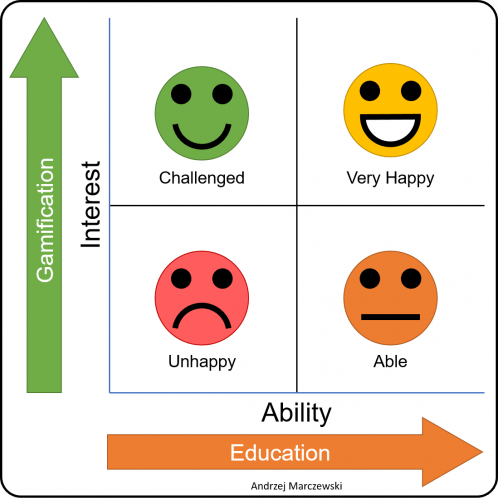
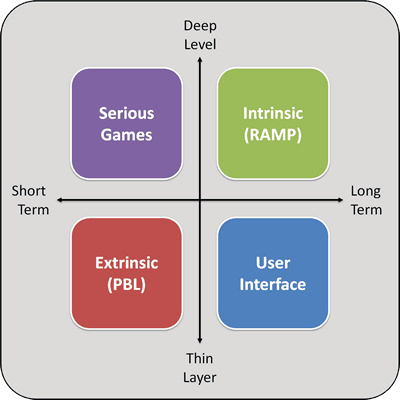
Time matters too. A rise from 100 engaged actions a week to 182 in the first week after launch looks fantastic. But if that falls to 60 a week a month later, what you measured was not sustainable engagement. It was novelty. Worse, it may be the start of burnout if the system relied on shallow mechanics rather than meaningful design. Andrzej makes this point often enough in different ways: good gamification should create relevance, depth, and long-term value, not just a short-lived spike in activity. Because apparently one framework was never enough.
This is the real issue. Statistics are not the problem. Context is.
If someone tells you engagement rose by 82%, you should immediately ask:
- How many people were involved?
- What was the starting point?
- How was engagement defined?
- Was it measuring quantity, quality, or both?
- How long did the increase last?
Without those answers, the number is just theatre.
Good gamification is not about producing a flashy percentage for a slide deck. It is about creating engagement that is meaningful, measurable, and sustainable. If the data cannot show that, the statistic may be accurate, but it is not telling the full story.
And that, sadly, is where gamification has often let itself down.
Similar Posts:
- Gamification: Is Activity as good as Engagement?
- Using Gamification to Elevate Design
- Thin Layer vs Deep Level Gamification


Also published on Medium.