



I know. Another blog and it’s not even 2027 yet!
Recently Troy, CEO of Zitcha and my ultimate boss, wrote about a conversation he had had about AI shopping with Steve Biddle. The crux was that Steve had wanted new trainers for refereeing football and had delegated the whole process to AI, from initial search to purchase. He got the outcome he wanted without having to think about the brand or the retailer. You can see the original LinkedIn discussion here.
Brand, style, emotion, humanity potentially removed from the buying decision. Or at least, no longer things the customer has to think about directly. He wanted the right trainers with as little hassle as possible. But does handing the decision to AI also remove the bias?
This got me thinking. What happens to traditional loyalty in this situation?
Traditional loyalty
A long time ago I wrote about loyalty and how it was more like love than anything else I could compare it to. It often makes no sense, but it is strong and takes a lot of work to maintain. I also referenced my favourite loyalty framework, the Multiple Loyalty Framework by the awesome Barry Kirk.

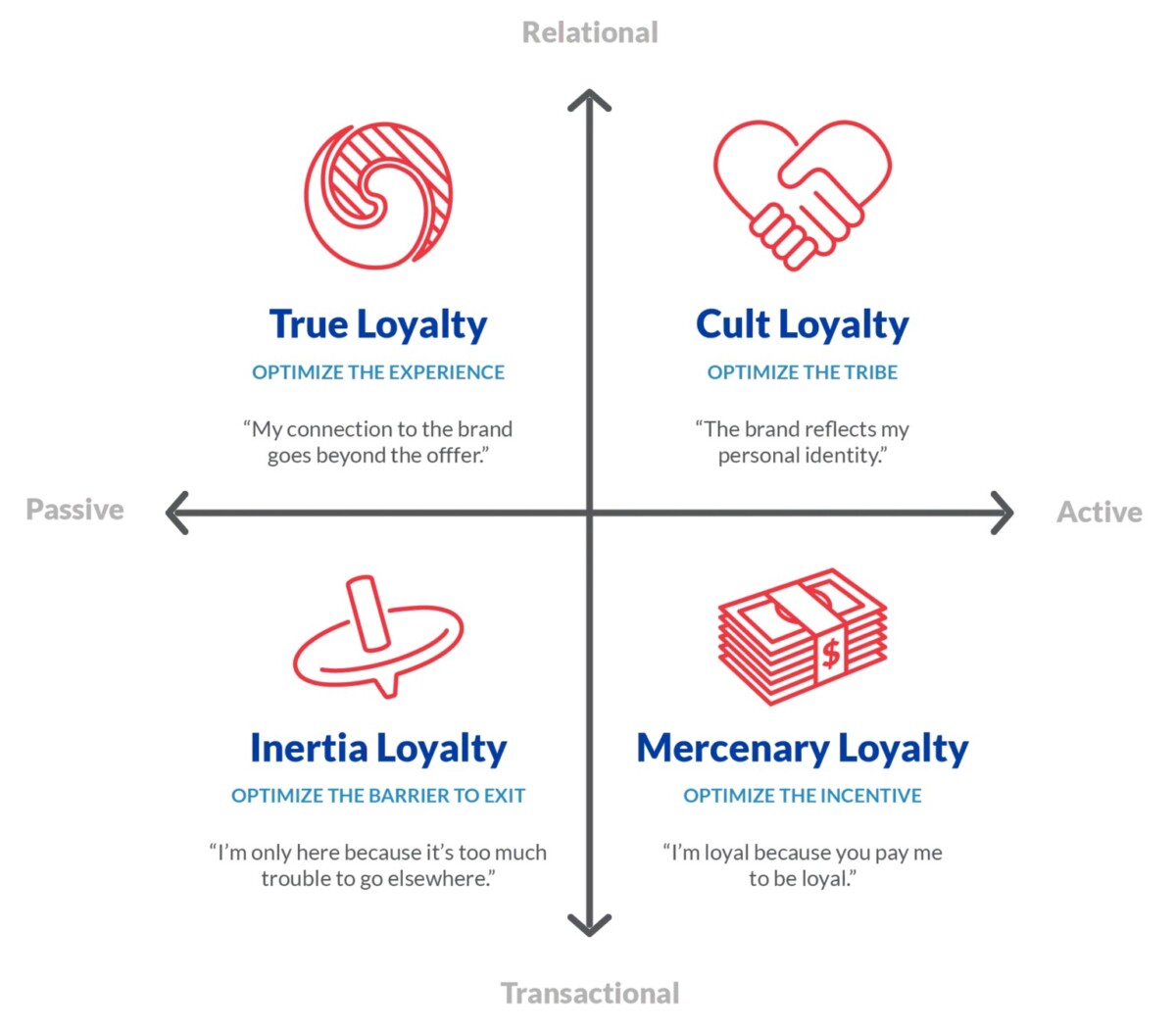
Multi-Loyalty Framework by Barry Kirk
It describes 4 key types of loyalty: True, Cult, Inertia and Mercenary. We might stay because of the relationship and experience, because the brand is part of our identity, because leaving is too much effort, or because we get something in return.
Now, these don’t necessarily disappear when you hand the shopping over to AI. I could still tell it to buy my favourite brand. The more interesting question is what happens when I ask it to choose for me.
In that original article, I talked about buying our Christmas turkey from Graham Turner. His shop had moved further away and there were more convenient options, but we still went to him. The quality, service and the way we were treated made it worth the effort. One Christmas Eve, he even kept the shop open so we could replace a turkey that was too small. I later told the story in my talk at Gamification World Congress 2015.
Would the AI choose a better turkey
So, what if I asked an AI to buy the best Christmas turkey and it didn’t choose Turner’s? Would I actually get a better turkey because it had chosen based on facts and data rather than my emotional attachment?
Possibly. It might find a better bird, at a better price, from somewhere I had never considered. My loyalty might be stopping me from finding something better. That is a slightly uncomfortable thought!
But Graham keeping the shop open on Christmas Eve is also information. It tells me something about what happens when things go wrong. Would the AI know that, and how much would it matter in its decision? I would need to trust it to understand what ‘better’ meant to me.
Delegated Loyalty
For me, this is where Delegated Loyalty comes in. I see it as a layer over those existing types of loyalty, rather than a fifth type alongside them.
You delegate the responsibility for choosing to an AI. It might act on loyalty you already have, or challenge it by finding something better. Over time, you may become loyal to that specific AI platform because you trust it to make those decisions for you.
There is a difference between asking it to find a few options and letting it choose and buy for you. The more you hand over, the more faith you need to have that it has your best interests at digital heart.
Of course, if I keep using the same AI simply because changing is too much effort, we are back to Inertia Loyalty. Repeat use alone doesn’t tell us whether that trust has been earned.
Facts not bids
Putting that much faith in an AI sounds a bit scary to me, especially in a world filled with advertising. How do you know that the AI is making a decision based on facts, not bids?
Being found is part of being chosen
Tess Gouws raised another useful question in the LinkedIn comments. What if the brands that win are simply those that are best at making themselves discoverable to AI? A better product cannot be considered if the AI never finds it. And asking for verified reviews doesn’t make the problem of paid or fake reviews magically disappear.
We have seen versions of this before with search optimisation, paid advertising, social media and influencers. AI could become the next cycle of brands learning how to get noticed. This time, though, the customer may never see the alternatives being rejected. Would Turner’s lose because its turkey wasn’t as good, or because another retailer was easier for the AI to find and evaluate?
Earning that trust
This is where the AI will have to earn my trust. It needs to understand what matters to me and give me a reason to trust its choices, especially when it recommends something I wouldn’t have chosen myself. The more I feel it is serving advertisers rather than me, the less likely I am to trust it with the next decision.
For brands, that means thinking about how an AI can find and understand the value they offer, including the things that don’t fit neatly into a price comparison. Someone still has to explain why keeping the shop open on Christmas Eve matters.
What do you think? If your AI chose a different turkey, would you trust it, or tell it to go back to Turner’s?
Similar Posts:
- A Formulaic Approach to Loyalty – the 4 Keys
- Loyalty: What is it and how do you cultivate it?
- A Story of Loyalty: Gamification World Congress 2015 Talk



Also published on Medium.