What Would Mario Do – A Simple Decision Tool!

Mario 1 1 What Would Mario Do 8211 A Simple Decision Tool

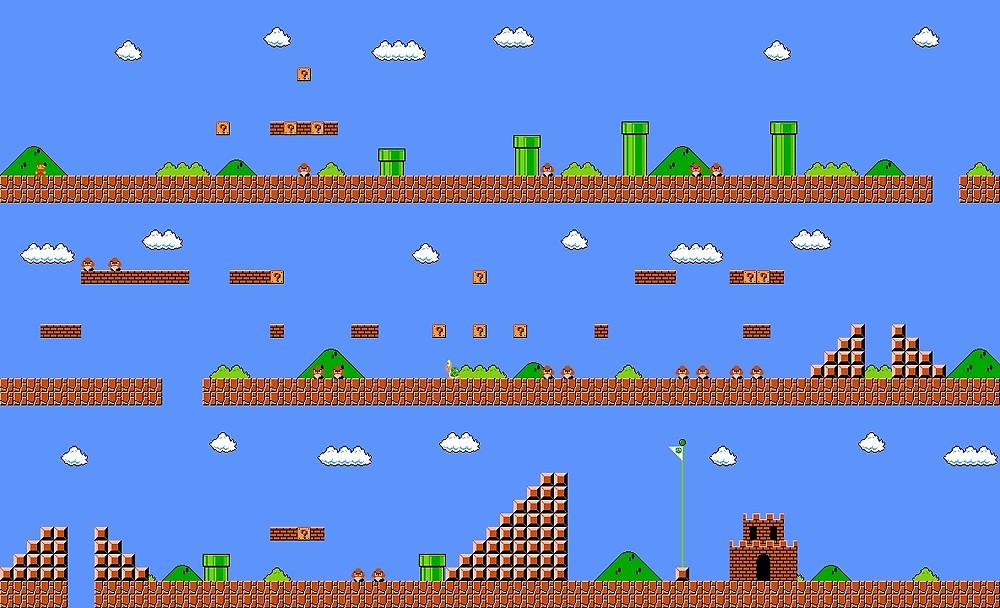
Super Mario Bros on the NES has been around for a very long time now, yet still, it exudes class and is a masterclass in game design. One of the reasons for that, in my view, is the simplistic choices that Mario has to make in the early stages of the game – especially the first screen. He has essentially four choices, two when presented with a bad guy and two when presented with an obstacle.

  • Obstacles: Use it, avoid it
  • Bad guys: Kill it, avoid it

So, when Mario is faced with an obstacle, he can try to break – which might yield goodies or just clear his path. He could try to just move around or over it, or he can use it to get to higher parts of the screen (or lower if you consider a pipe taking him to bonus sections). Read More ...

How would you change current behaviours on scale?

After the success of last week’s question to you all, I wanted to try it again – and say thanks for the advice!

As I sit here, the rate of infection in the UK associated with COVID19 is on the rise.

Yet public apathy towards it seems to still be increasing.

In our local shopping centre, we have a one-way system in place, so people do not cross each other’s paths. The stairs are for people going down between floors only. There are clear signs before the stairs saying “Down Only” and each step has a big red “No Entry” sign stuck to is that is clearly visible as you ascend or even approach, Read More ...

The “Less Bad” Lens – Making a Small Difference with Gamification

How big a difference does gamification have to make to be of value to an organisation?

When I first started, I used to see some staggering statistics of how gamification had improved a process. 200% increase in productivity, 300% more users registered and so on. The issue was, when you asked who to see the real data, it was much less impressive. Sample groups would be 7 0r 8 people. The 300% increase could just have been  3 people registering compared to 0 people the week before!

However, many did not ask those questions, they just saw the big numbers and had unrealistic expectations of what gamification could deliver – expectations that some companies were happy to perpetuate to their own gain. The issue with this was obvious to the rest, if the expectation was that high and we honest few knew full well it could not realistically be delivered upon, people would lose faith in gamification – which is what happened. Read More ...

But What If They Get Addicted To Your Gamified System?

Amazingly the question “But what if people get addicted to the solution and stop working” has come up in more than one conversation with clients over the years.

It’s an interesting question, that is worth thinking about. At first, it is easy to dismiss this as silly. When you think about it, thousands of games are released each year – about 9000 just on Steam in 2019 – the majority of them are totally unknown or fail. So how on earth is your gamified system going to become more important to people than the games they want to play or their work? Read More ...

How Are You?

This is from my guitar related channel, but I thought it was important to share it here as well (as I have not been sharing much here of late).

How are you? Let me know in the comments. Mental Health is a struggle many of us face and it is important to remember that you are not alone. The following link has a list of international mental health charities you can reach out to.

International Mental Health Charities

🔍 Find Me
Support Me on Patreon ► http://bit.ly/PatreonYARS
Main website ► https://amguitar.uk
Twitter ► http://www.twitter.com/DaveRage
Instagram ► http://www.instagram.com/DaveRage
Email ► reviews@yetanotherreviewsite.co.uk Read More ...

Exit mobile version