But What If They Get Addicted To Your Gamified System?

Intrinsic vs Extrinsic Motivation But What If They Get Addicted To Your Gamified System

Amazingly the question “But what if people get addicted to the solution and stop working” has come up in more than one conversation with clients over the years.

It’s an interesting question, that is worth thinking about. At first, it is easy to dismiss this as silly. When you think about it, thousands of games are released each year – about 9000 just on Steam in 2019 – the majority of them are totally unknown or fail. So how on earth is your gamified system going to become more important to people than the games they want to play or their work? Read More ...

Gamification can be so much more than points if we let it.

Just a short plea to the games based solution industry, be it gamification, serious games, VR whatever.

If you are going to use gamification as a selling point, please (please please please) don’t use a phrase like “we gamified the experience by adding points”

I was recently on a webinar where a developer was showing off an amazing VR experience, which had narratives and gameplay and was really superb. They then used the above phrase. “We gamified the experience by adding points”. Read More ...

Free Printable Games

Hi all.

In this crazy time, I thought I would share a few games that I have made over the last couple of years to either entertain myself or the kids! They are all very simple but might help kill a few hours. Any feedback on them would be also greatly appreciated. They are all very simple looking btw, no fancy graphics!

There will be one more soon, once the kids have had a chance to play it. But head to the gamification hub on Facebook if you want to get a try now. It is a simple escape room type puzzle game.

Wraith King

This is the most complex. It is a solo or co-op tile-based dungeon crawl. I enjoy playing this from time to time when I am stuck for something to do. The world evolves as you play to try and defeat the Wraith King in his lair.

Download Wraith King

Shortcut

This is my favourite (and the kids). It was born on a napkin in a restaurant when my youngest was very board. I wanted something more interesting than snakes and ladders. I bought some drywipe pens and some drywipe sleeves to make the game reusable.

Pens: https://amzn.to/2XkkxEL

Sleeves: https://amzn.to/3bW1qoC

Download Shortcut

Driver

The simplest game, with 2 difficulty “settings”. Just race around the track!

Download Driver

Using RAMP to keep kids learning during lockdown

It was thinking about my children’s current situation of having to learn remotely. So, based on current experience and the aforementioned blog, here are some tips on using RAMP to help your kids stay engaged and motivated during home-based learning.

Setting the Scene

I have two kids who are currently at home doing school work, 8 and 12. They both have totally different learning styles, needs and of course work to do. The 8-year-old is normally very task-focused with a need for total control of her environment and rigorous routines. The 12-year-old is totally different with some significant learning/processing difficulties in the form of dyslexia and dyscalculia.

The 8-year-old has maybe 2 hours of work set by the school per day, whilst the 12-year old seems to have more work set for home learning than when she was in the school full time – but that is another story!

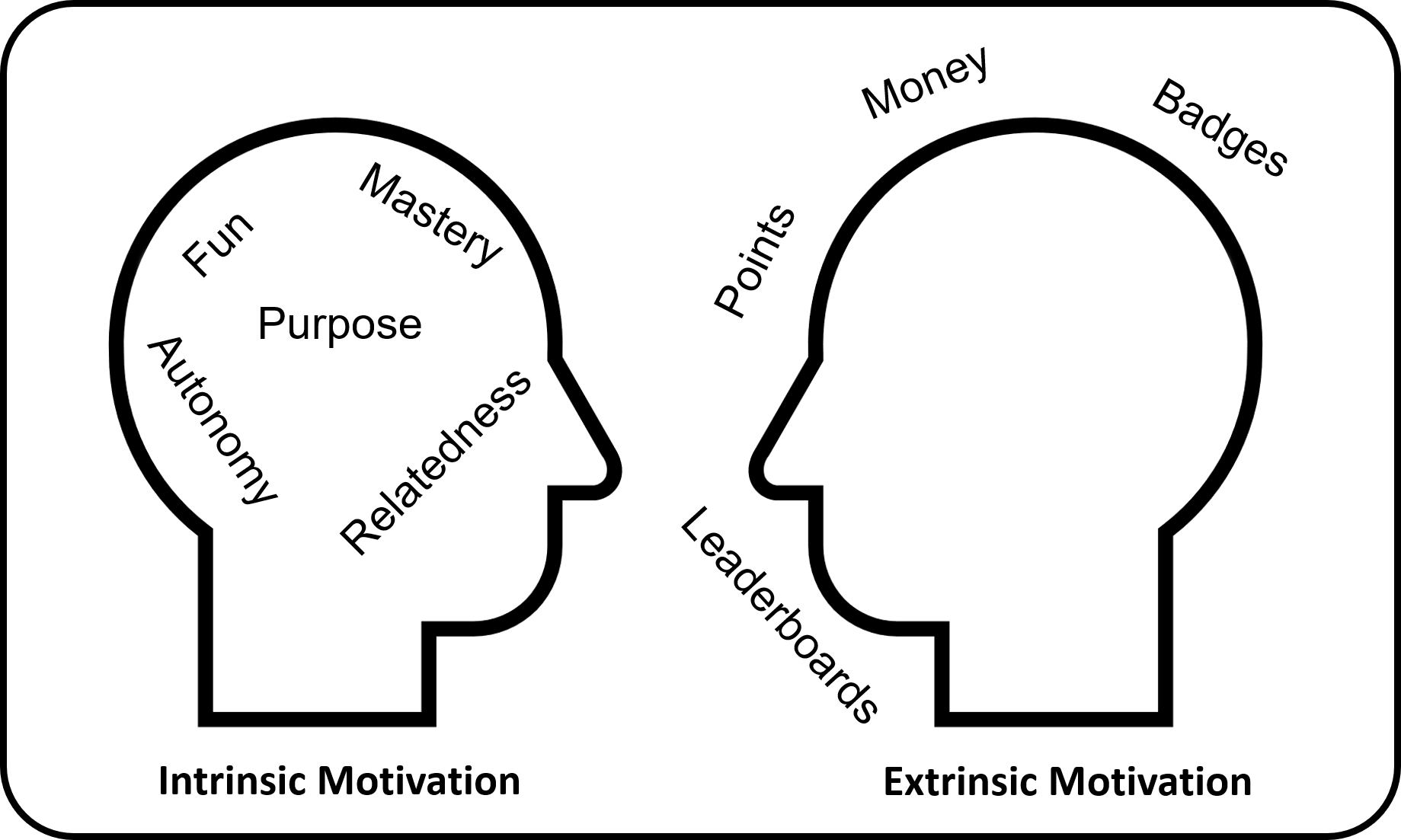
RAMP is a simple motivational framework based on self-determination theory that I published here originally in something like 2012/13. It stands for Relatedness, Autonomy, Mastery and Purpose.

R.A.M.P During Home Learning Lock Down!

So, how can we make use of this to help our kids during this period of lockdown (or any period of home learning)?

Relatedness

Making sure your kids have ways to stay connected to friends and other family is essential generally during long periods of isolation. However, during learning periods it can also be an invaluable way of keeping them a little saner and getting help from their peers. This requires certain tools. My eldest likes to dial friends in using Facetime on her iPhone so that they can chat whilst they are working on the same bits of schoolwork. There are other apps out there that can do this, she also uses WhatsApp with those who are not on iPhone. She also uses groups on WhatsApp to keep in touch via text with specific groups of peers at school. They use these groups to moan about the amount of work, the teachers, each other but also to get help (which we will come to in a bit). Other tools include Skype, HouseParty and probably many more.

I find that this is one of the most important motivations to consider when thinking about how kids can thrive in these periods of isolation. They have gone from being surrounded by dozens of people all the time to just one or two and that is very scary and a huge change for them. Make use of technology to help!

Autonomy

This is a little trickier and will be counter-intuitive – but bear with me!

In theory, autonomy is great hugely important to motivation. However, when you consider school and the strict timetables involved, it is hard to see how autonomy can get involved. How do you promote free-thinking and working at your own pace when you are stuck with a draconian educational system that relies solely on presenteeism? The paradox deepens when you look at how alien running learning from home is to many teachers. The current workload my eldest has is actually heavier than her school day. Instead of 9-3:15, she is currently working 8:30 until 4 with fewer breaks just to stay on top of it.

On the flip side, my youngest has about 2 hours of work set per day at most.

SO, how do we work with this? Well, it depends on watching how your child learns in this new environment.  My youngest, who we thought would need strict time tables to maintain her routine, actually thrives on just being left to get on with stuff as and when she wants. Rather than spacing her work out over the day on a time table, she takes herself up to her room at 8:30 and just works on it until it is all done, giving her the rest of the day to play. That works great for her.

My eldest, due to the level of work involved, has to stick to a time table. However, we give her the autonomy to decide when she starts and finishes. If she wants to start at 8:30 that is fine. Id she wants to work through lunch, that is ok – if we think the mental load is not too great for her. We use her timetable as a framework, and she goes from there.

It isn’t easy, but my advice is to experiment with different levels of autonomy to see how your child performs. We are all learning here!

Mastery

This seems pretty obvious really. They are learning, so they are experiencing mastery. The issue is, for the most part, they don’t want to be doing it. This means that any intrinsic motivation felt from mastery is all but lost! Instead we need to look at goal setting and small wins. If you are working to a time table, this becomes fairly easy. Each period of the day is a new task and goal. Celebrate getting through each piece of work with a snack, or a play outside for a few minutes – or just by saying well done to your kids!

If there is no time table, then you need to set lest organised goals, but goals none the less. Get 3 pieces of work done by 1pm. Get 1 piece done by 10am.

Once you have goals set for your kids, make sure you congratulate them for achieving them – this is very important. Congratulate their achievements and support and encourage them if they are not hitting their goals. This isn’t school remember, they are still at home and if they need longer – you can give them longer! Don’t punish them or shout at them if they don’t completely work.

This brings me to the final point around the goals. If they are struggling to get work done, let them stop at a defined time. COnsider in class they only have 30 minutes or an hour (usually). At the end of that time, they stop and go to the next lesson. When working from home it is tempting just to keep going until it is done. If they really want to, let them, but if they are struggling make the stop at a sensible place. COngratulate them for their effort. If they have to submit their work, add a note explaining that they spent over an hour working on it. Most teachers will be fine with this – remember they are new to this as well!

Purpose

We will consider both types of purpose. Meaningful and Altruistic.

Meaningful Purpose – why am I doing this. this is tough when they are at home like this. It is especially tough if, like my youngest daughter, the work they are doing is not being submitted to the school or marked! It is also tough when you get comments like “what are they going to do – give me detention?”.

You need to reinforce how important it is for your kids to not fall too far behind, as it will cause them issues when school starts up normally again. Remind them how the majority of lessons are still teaching them important life skills. Keep encouraging them and telling them how awesome they are.

I am not going to lie, I am hating how learning from home is being handled. The work is dull, uninspiring and really hard when the kids have no support. I am not a teacher, I can’t help them with everything they are doing (I’m also working full time!) But, for the sake of their sanity – I keep those opinions to myself!

Altruistic Purpose – How can I help others. As mentioned earlier, there are plenty of tools available to help keep your kids connected to their friends. This is especially important when they are struggling and need help. Using WhatsApp groups is a great way to give them an opportunity to ask for help, but also to provide help for others, which can give them a great sense of satisfaction. Encourage it – and for the love of God, don’t ban their phones whilst they are working!

The Final Word

I am not a teacher. I don’t know what I am doing any more than most parents who have been thrust into the position of both carer and facilitator of home learning. It is hard and confusing and scary for the kids and for us as parents. We can only do our best and trust that the teachers are setting work that is relevant to our children and at a level that they can manage. Keep in mind though, with the teachers not able to directly help in class, you may need to stray from certain paths whilst you wait for responses to cries for help from them!

Be flexible, be understanding, keep RAMP in mind and keep doing what you are doing – you are awesome and we will all get through this.

Stay safe, be considerate of each other and please please please – wash your hands!

Gamification: Adding Constraints to Add Fun

It may sound counter-intuitive, but in my experience, adding constraints to activities can make them not only more fun – but can help generate very creative solutions to problems.

When we talk about gamification and especially when we speak about motivations, we often talk about Agency and Autonomy (the A in RAMP). This would lead you to believe that for certain groups to engage, you need to give them total freedom to do whatever they want.

However, it can often be more interesting to allow freedom within a strict set of constraints. You only have £1000 to complete this task, you have 10 minutes, you have 3 lives etc.

It’s these constraints that force you to really consider your actions carefully. If you overspend, will you be able to complete the task? If you spend too long on a minor detail, will the overall task fail? If you only have three chances, do you waste them on poorly thought out strategies?

When building a gamified solution, consider how you can restrain your users from just randomly trying everything, by imposing small constraints. Use them to force reflection about each choice they make. They will feel that those choices have more impact if they had to decide what sacrifices to make to get there.

Exit mobile version