Exploring the Player User Type – with archetypes

Player archetypes Exploring the Player User Type 8211 with archetypes

To finish off my little look at the sub-types from my User Types, I want to take a new look at the Player User Type.

I have done a deep dive on this before, but I wanted to simplify it a little.  Essentially the Player is motivated by rewards, plain and simple. They will do similar things to the intrinsically motivated group, but only if there is a reward at the end of it!

  • Self-Seeker: This group of users will act in a similar way to Philanthropists. They will answer peoples questions, share knowledge and be helpful – but for a cost. If there is no reward, don’t expect them to get involved! They can be useful, however if they are being asked to get involved for rewards, expect quantity over quality!
  • Consumer: Consumers will do what is needed to get rewards. If that requires them to learn new skills or take on challenges (like an Achiever), then they will do it. However, if they can get rewards for just doing what they were already doing – even better. Think of them as the ones who will enter competitions just for the prize or who shop at one store just for the loyalty programme.
  • Networker: Where a Socialiser connects to others because they are looking for relatedness, Networkers are looking for useful contacts that they can gain from. They follow the big influencers on social networks, not because they are interested in them, but because they hope it will get them noticed, increase their influence and lead to reward.
  • Exploiter: Like Free Spirits, these guys are looking for the boundaries of the system, where they can go and what they can do. However, for them it is a way to find new ways to rewards. If they find a loop-hole, don’t expect them to report it unless they feel others are earning more than them exploiting it! They are the most likely to exploit the system (you could say cheat!). They are also the people who will build things just to sell. Think of Second Life. Loads of people started to build things – some realised that as well as being fun, they could make some money from selling items. For a few this turned into a way of making a living. They stopped making things for fun and just made them for profit.

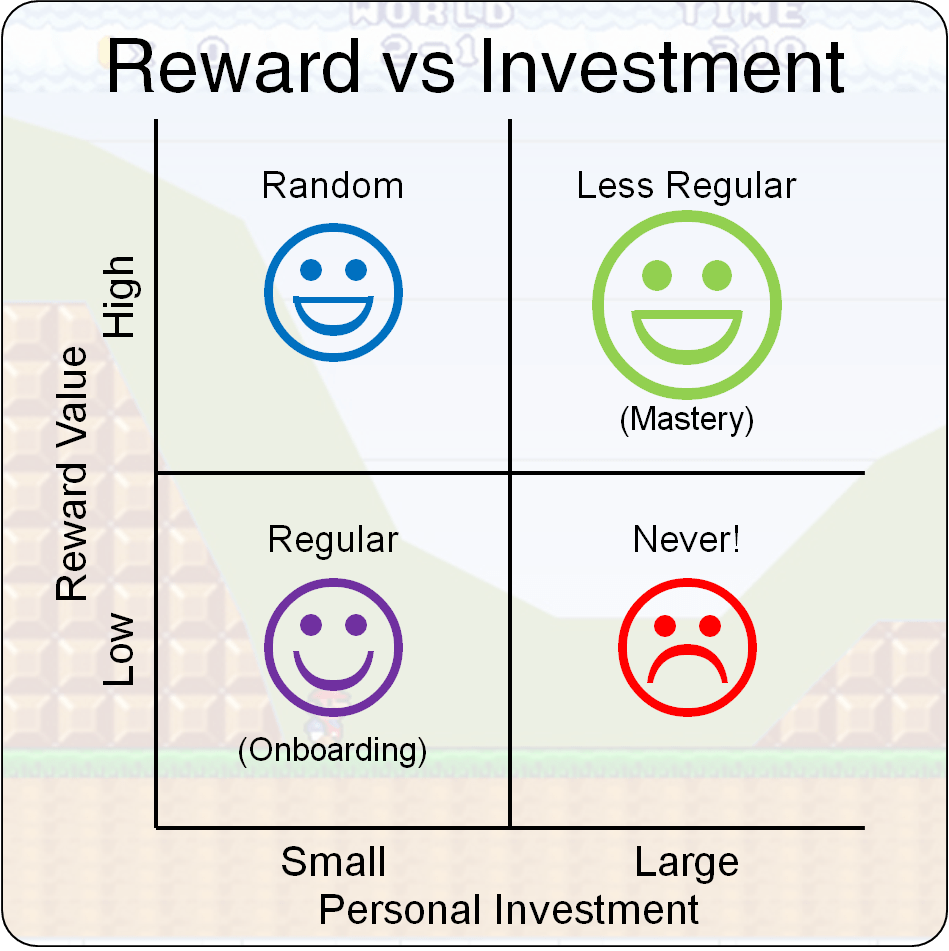
The Player User Type is important to recognise as most people coming into a gamified system are probably there initially due to rewards (points, prizes etc). The trick is to try and convert them from being reward oriented into intrinsically motivated users (Socialiser, Free Spirit, Achiever, Philanthropist). There is some evidence to show that the extrinsic types will convert to their analogous intrinsic types (so Networker -> Socialiser etc) but it is not a dead certainty in all cases. Design for the intrinsic user types that benefit your system, but include reward paths for the onboarding process for best effect and greatest coverage. Read More ...


CaptainUp is back on the blog

I was recently contacted by the guys from CaptainUp (www.captainup.com). For those that don’t know, this is a free / affordable platform for gamifying websites and until recently I had been using it for about 2 years. Then I stopped and they were interested to know why.  The main reason was how intrusive it was to my readers, with popups and flashes and the like distracting from the content.

So they asked if I was willing to try something – a package they wanted to test that was less invasive and focused more on just gently thanking my readers for their loyalty.  So it is, CaptainUp is back on the blog – just slightly more low key.  You get one popup asking you to join my little club. After that there is always a small bar at the bottom of the page that will let you join should you wish. There is a leaderboard as well. Badges can be earned for simple things such as liking and tweeting. There are a couple of missions as well (more to come). The first you should try is the Onboarding one. See the progress bar on the left of the page? Click it and it will show links I feel all my readers should have looked at to understand my content better Read More ...

Disruptor Superhero Archetypes!

I love superheroes, I make no apology for that! A while back I did a post that compared my User Types to various superheroes and super-villains.

I thought it would be fun to do the same thing for the Disruptor sub-types. It has caused me some issues and I am not totally convinced by one of them, so I would love to see your comments or indeed conversation in the forums about how this could be improved. However, until then – here are the Disruptor Superhero Archetypes!

Magneto: He represents a bit of everything so is my choice for the overall Disruptor. He wants change, his way and will use any method possible to assure it! Read More ...

Exploring the Disruptor User Type

As time passes and I learn more, I often re-evaluate my past blogs and ideas – none more-so than my User Types! Now, don’t panic, I am not about to release version 3 – the User Types Dodecagon. The purpose of this post is to just clarify my current thinking around the disruptor type, based on what I know now.

The basic idea is still the same. Disruptors disrupt a system in some way. This may be by acting on users or on the system itself. As with the Player type, the Disruptor type is a group rather than a single type. However, I don’t tend to go into the detail as the effect on your design is generally similar for all the variations of the type. Read More ...

4 essential Neurotransmitters in gamification

In gamification, there is often a lot of mention of things like “Neuroscience”, “Neurochemistry”, “Neurotransmitters” or “Brain Chemistry”. In particular, you will hear people speak about neurotransmitters such as Dopamine.

Neurotransmitters are chemicals that transmit signals around the brain. They all have different functions and have different effects on us. In this blog I am going to discuss 4; Dopamine, Oxytocin, Serotonin and Endorphins (DOSE). Read More ...

Exit mobile version