What You Want vs What You Need

Jujitsu What You Want vs What You Need

My JuJitsu instructor always used to say,

“I’ll teach you what you need, not what you want”

This always struck me as a fabulous way to look at teaching in general and one that I used myself as a JuJitsu instructor, mentor and everything else I have done that involved passing information to others.

Getting what you want is very rarely as important as getting what you need. In fact, getting what you need more often that not allows you to then earn what you want. In martial arts, like most things, you need the foundations, the boring things. The form work, the katas, the hours and hours of repetitive grind. The same is true in games. You need to get the basics before you can do the interesting things. You may not want to do them, the tutorial level is often not the most exciting, but you need them to be able to then go on and do what you want to do in the rest of the game. Read More ...

Risk and Reward in Gamification

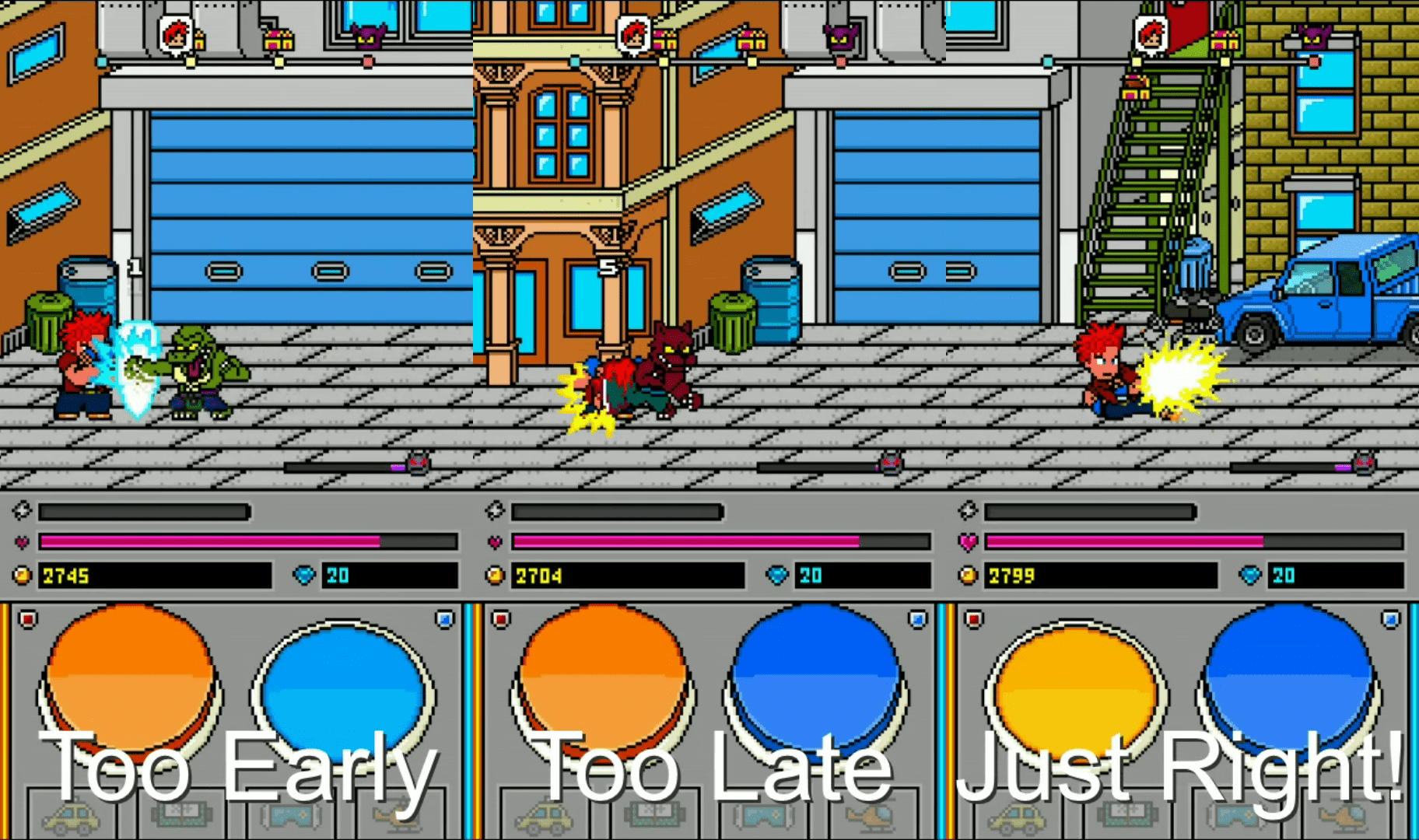
Recently I have been playing a game called Punch, Punch, Kick, Punch (PPKP). It is a simple mobile game that only requires 2 buttons to play. One is kick, one is punch. As you play, you have to learn how to time the use of these buttons and the combinations that are most effective against certain foes. The reason I mention it is because it has one of the simplest examples of risk and reward in a game I have seen for a while.

What is risk and reward I hear you cry.. or maybe not, but I’ll explain anyway. It is the idea that if the more you are willing to risk, the higher the reward might be. For instance, the more lotto tickets you buy, the more chance you have of winning – but it costs more, the risk is higher as you have spent more. Read More ...

Reward Excellence not Mediocrity and Expectation

When designing a reward system, it is easy to be tempted to reward everything!

  • “Hey, you clicked on a button – woot”.
  • “Awesome, you clicked that button twice, go you!”
  • “OMG, you clicked that button 10 times now, you are the button king – have the button king badge!!!!!”

The trouble with this is it devalues rewards very quickly. I have written in depth about rewards and badges before, so won’t go into it here. What I want to put over in this short post, is the need to reward the right things and congratulate others.

Take my daughters school and a previously mentioned issue I have around them rewarding kids for attendance.  100% attendance = a  reward of no homework for a week and a certificate. The issue here is the children being rewarded are 99% of the time not in control of their attendance. It is down to illness or parents taking them out of school for various reasons. It also highlights those who are unable to maintain 100% for reasons out of their control and could turn the class against them. Read More ...

The Trouble With Types

Player Types and User Types, I’m not gonna lie, I love ’em. I imagine that is obvious considering I have spent so long making my own!

However, it’s time for a bit of a tidy up of misconceptions about types –  a misconception my love of them may even have helped to perpetuate.

Misconceptions

Bartle has 4 Player Types

Actually, he has 8. He realised there were limitations and duality in his 4 types, so he created a set of 8 that accounted for this. https://mud.co.uk/richard/selfware.htm

Everyone is Just One Type

No matter what model or taxonomy you use, the likelihood is this is just not true. We probably display all types in our personality, just in different amounts and in different contexts (more on that in a moment) Read More ...

Keeping it Real in Fantasy Worlds

A Game of Rules

Richard Bartle recently raised a really interesting point about certain fantasy based shows and games after watching Game of Thrones. His complaint was that even in fantasy worlds, there need to be rules and those rules need to be stuck to. Anything that is not explained by the new fantasy rules of the world should then default to the rules of the real world. One example he gives is that of Sam in Game of Thrones. Despite a very active lifestyle in GoT, he doesn’t lose as much weight as you might expect if it were the real world and there is no explanation for that. You can understand the existence of magic and dragons because the narrative introduces them early on — so they are part of the rules of the world. However, lack of weight loss in Sam’s instance seems to be very unlikely. Read More ...

Exit mobile version