Gamification: Low tech real-time feedback

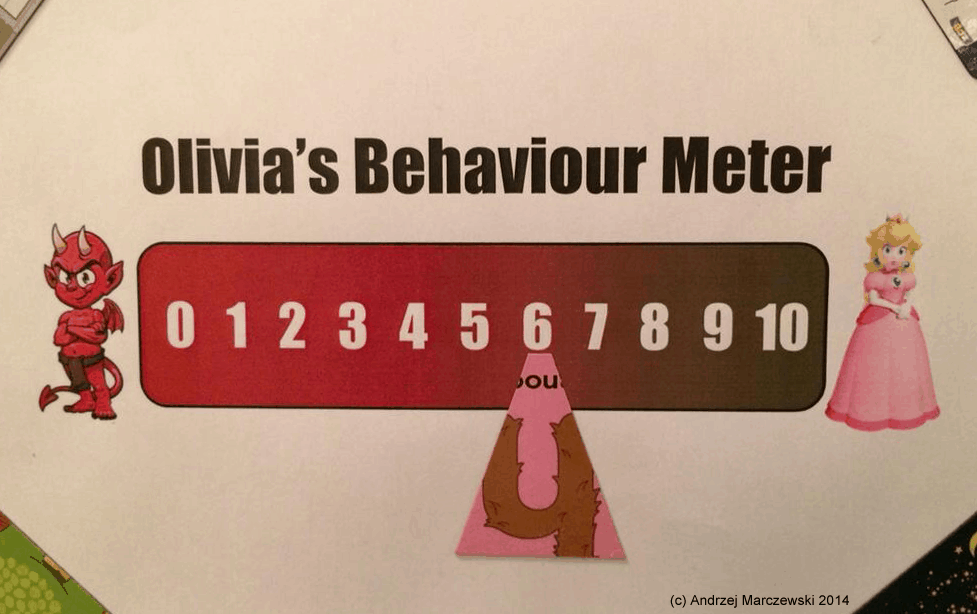
Behaviour meter Gamification Low tech real time feedback

Using gamification on my kids is nothing new. I have openly written about my failure as a gamifier when it came to my eldest daughters reward chart!  However, now I am trying a little experiment, one that is nice and low tech and involved no points or badges!

On our fridge we now have this little chart.

Throughout the day my wife and I alter the position of the arrow depending on how my daughter is behaving. We don’t tell her what the current reading is – she has to look at the feedback for herself. Of course this is on top of other verbal feedback we are giving her as well. However, this gives her a fixed reminder of how we feel she is doing. Read More ...

Rules, magic circles and other ways to avoid misfortune

A while back I wrote a piece called Rules Rule, but Shouldn’t Rule Everything. The upshot of the article was that you have to have rules for things to work, but you also have to understand the rules to be able to bend and break them when needed.

Rules are really important in gamified systems, they collapse without them.  Some rules are explicit and set by the system. These are the ones that you can’t break without hacking or breaking the system. Others are implicit or implied. These are the ones where trouble can sneak in. Read More ...

First considerations of Gamification

On thing I am asked more than any question when it comes to gamification, is how do I get started. What is the first thing I should do.

The answer they are hoping for normally is something like “Download this great framework and slap it on your product – job done”. However, this is never my answer (though at times, if it is suitable for their needs it will be part of the answer… but that’s another story!).

What I actually say is “Decide WHY you need gamification and WHAT you are actually using it for / on”. That should be the first days of discussion. Too many times you see gamification applied just because it can be applied. Read More ...

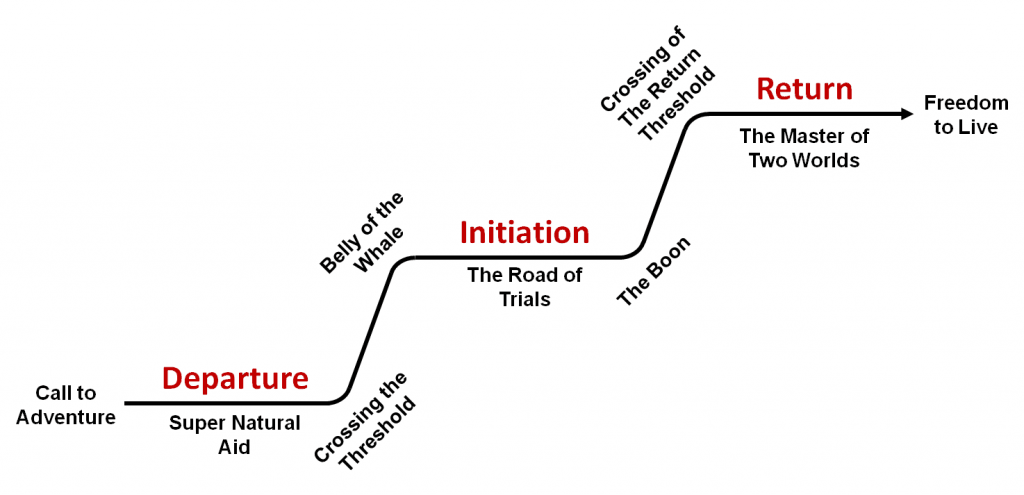
The Hero’s Journey of the User

What follows is a little bit of fun, but one that may help you take another look at how you are planning your user journey in gamified systems. In storytelling and therefore in games there is a structure that is well known and well used called the Hero’s Journey or Monomyth.  It was first described by Joseph Campbell in 1949 to show how many myths all followed a very similar structure.  In the modern world, it can be seen in stories such as Star Wars and The Lord of the Rings. It can be seen in video games as well, one example being the Zelda games. Read More ...

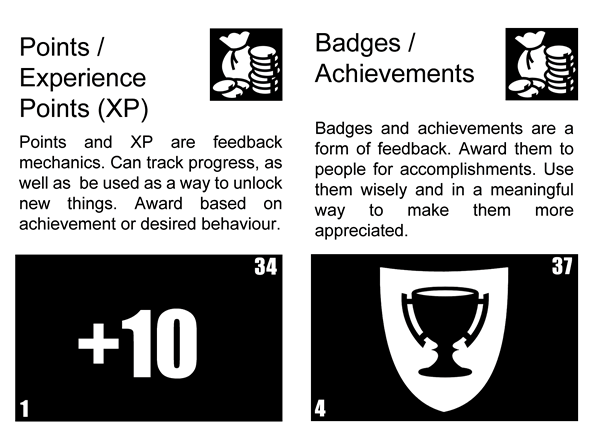
Points and Badges in Gamification – Not totally evil.

Over the last few days, the conversation about the use of points and badges has come up several times with several different people.

The stock answer in gamification these days is that points and badges are bad gamification. They are meaningless and we should be looking at intrinsic motivation more – yet almost every implementation you see of gamification will have some form of points system and probably badges.  They may be called experience points and achievements, or gami-dollars and pictograms – who knows – but they still seem to be there. Read More ...

Exit mobile version