A long time ago, I created a little framework for improving teamwork in organisations. I had forgotten about it until a recent conversation! So here it is, the TRAC to Teamwork
The TRAC to Teamwork


A long time ago, I created a little framework for improving teamwork in organisations. I had forgotten about it until a recent conversation! So here it is, the TRAC to Teamwork

We’ve all been there. You stop at traffic lights, and a frenzied delivery cyclist swiftly zips in front, ignoring the light. Perhaps you’re at KFC, jostled by a swarm of Deliveroo and Uber Eats drivers, all clamouring and gesturing at order numbers on their phones. Or maybe you find yourself unable to access your driveway because a colossal white van obstructs it, while an Amazon delivery person leaves £300 worth of electrical goods on your neighbour’s doorstep in the pouring rain.

For over a decade, “gamification” has been the prevailing buzzword, promising to infuse a dash of gaming enchantment into our mundane tasks. But was it merely a façade, as game designer Ian Bogost vehemently argued back in 2011? Let’s delve into the gamified world and discern whether it’s a genuine game-changer or simply another marketing gimmick.
In the past, Ian Bogost unabashedly declared, “Gamification is Bullshit.” He accused it of being a slick marketing ploy concocted by consultants to transform corporate life into a mere video game simulation. According to him, it’s a form of smoke and mirrors, impressing and coercing without any substantive foundation. Bogost also took a swipe at gamification for oversimplifying the potent elements that make games truly impactful.
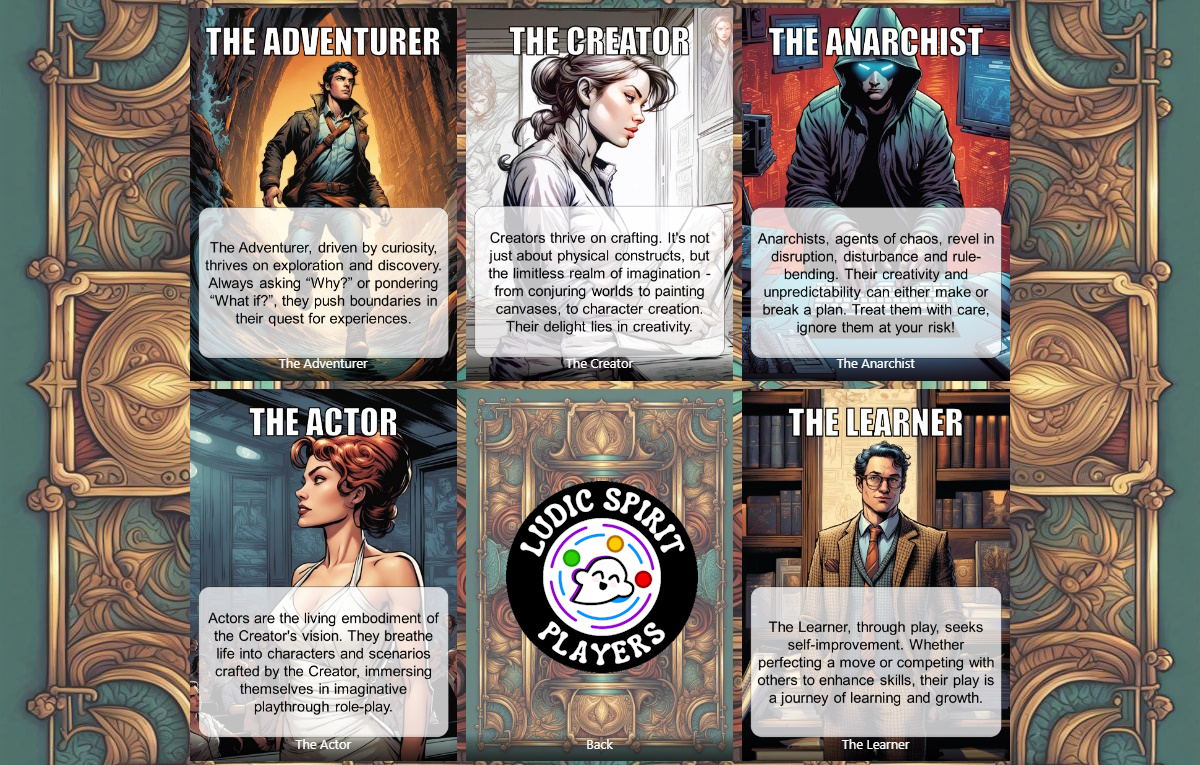
I appreciate a well-structured typology, but only if I find it useful. So, it was a bit of a battle to justify yet another one to myself. But I managed, and so I present the Ludic Spirit Players!
Based largely on observation of my own kids over the last 16 years, as well as other work in the field of play by those such as Bernard Suits and Bob Hughes, these “types” are specific to the way I am forming this Ludic Spirit stuff and Play – not Games or Gamification, so it is not an all-encompassing list of play types or types of player!

I want to keep this Ludic Spirit idea going as it is now shaping how I view pretty much everything in a way that gamification never really did. It is a much simpler way to improve the world around me that does not rely on the sorts of reward frameworks that gamification often needs you to design.
Obviously, I am still using RAMP (Relatedness, Autonomy, Mastery & Purpose) to help me break down how I am applying Ludic Spirit-related elements and concepts. However, for now, I am focusing on me, the person, not me the product designer – sometimes you have to shift focus back to you!