
Streaks Drive Stress Not Success

File 0000000085788243b718938ff5670d12 Streaks Drive Stress Not Success

Streaks are everywhere.

Streaks to “encourage” learners to come back every day to learn a language. Streaks to “encourage” players to come back to a game every day. Streaks to “encourage” people to exercise every day. Streaks to “encourage” users to message their friends every day on messaging apps.

Yeah, I was unsubtle there with my little “encourage”.

Streaks are simple behavioural psychology.

Unfortunately, they’re often implemented as little more than bribery, wrapped in negative messaging designed to make you feel that not coming back will have consequences. Read More ...

Reading, Rewards and How to Accidentally Kill Joy

I recently ranted on LinkedIn about my youngest child’s school using attendance awards to encourage children to achieve 100% attendance. You can read that if you want my views on that particular bit of educational nonsense, but this rant is not about attendance.

This is about reading.

More specifically, it is about how a well-intentioned reward system managed to take something joyful, meaningful and personal, and turn it into a badge-chasing exercise.

When Reading Became a Quest

My youngest used to be an avid reader. Properly enthusiastic. The sort of child who would disappear into books because she wanted to, not because someone had built a laminated progress chart and started handing out shiny things. Read More ...

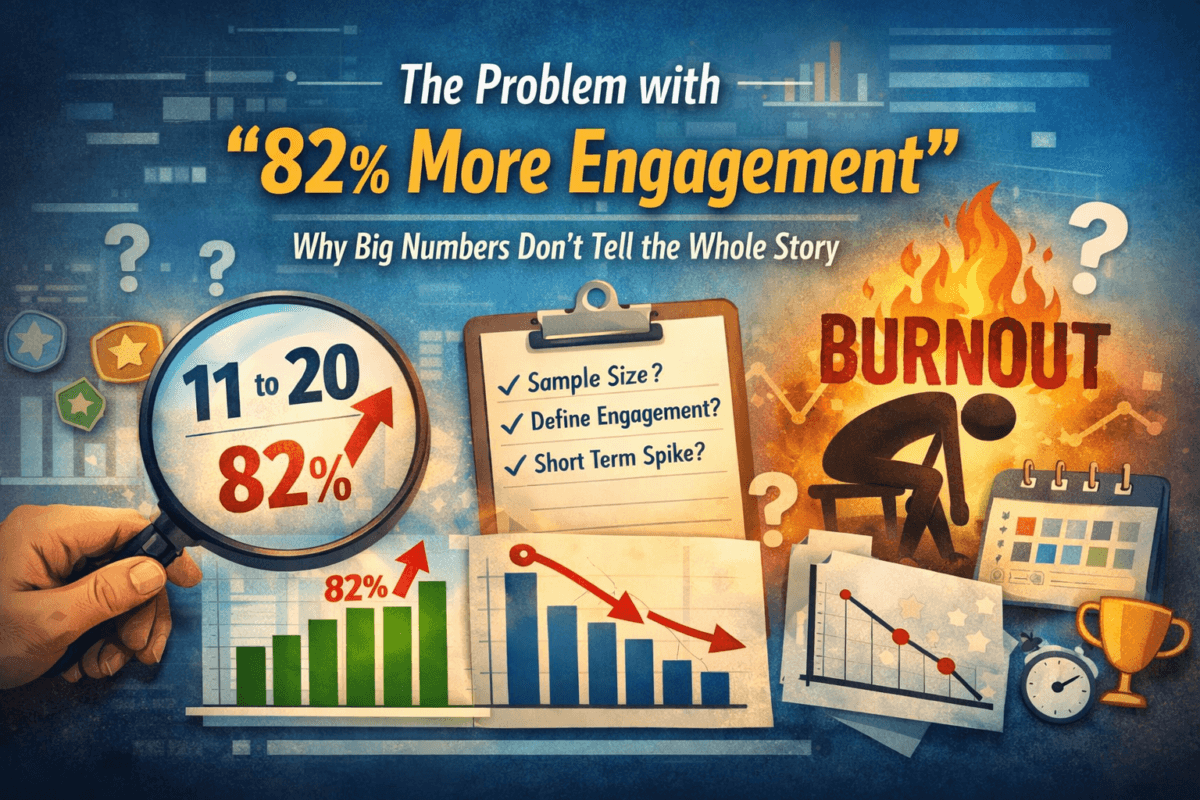
The Problem with “82% More Engagement”

I love statistics. They are wonderfully effective at hiding the truth.

Gamification has been especially guilty of this over the years. We have all seen the headline:

“82% increase in engagement after gamification was introduced.”

It sounds impressive. On its own, it means almost nothing.

An 82% increase could mean engagement went from 11 people to 20 people. That is a real improvement, but it is hardly the same as the grand transformation the headline suggests. If the programme only involved 50 people, the number looks even less dramatic once you see the actual scale. Read More ...

Dynamic Narrative Analytics: Turning Player Data Into a Playable Story

One of the greatest lies we’ve told ourselves in gamification (and business in general) is that numbers speak for themselves. They don’t.

Numbers sit there, mute and smug, like a cat perched on a bookshelf—daring you to make sense of them. And like a cat, they’ll let you project whatever meaning you want onto them… until you get scratched.

That’s where Dynamic Narrative Analytics (DNA) comes in.

This isn’t about algorithms. It’s not about drowning in dashboards. It’s about recognising that every dataset tells a story—and if you don’t write the story, someone else will (probably in PowerPoint, with clip art). Read More ...

The Foosball Fallacy & The Beanbag Illusion


Ah, the modern office. Where engagement is measured in beanbag density and the number of foosball tables per square metre. Welcome to the illusion factory.

I call it The Foosball Fallacy—the misguided notion that plonking down a few shiny toys in the corner of your open-plan office will somehow spark authentic employee engagement.

You’ve heard the logic:

“Let’s make work fun! We’ll add a games room and a cereal bar. People love cereal.”

What you get instead is superficial fluff. A workplace that looks like a startup, sounds like a pinball arcade, and still has an engagement score flatter than your last quarterly review.

Then comes The Beanbag Illusion, which is even cosier. Quite literally.

It’s the belief that providing comfort—softer lighting, flexible seating, and yes, beanbags—translates into meaningful culture. But here’s the thing:

Comfort is not culture. You can’t outsource purpose to interior design.

Employees don’t stay because they’re well-fed and slightly reclined. They stay when they feel valued. When they can grow. When they have autonomy. Mastery. Purpose. (Yes, you’ve met RAMP. You should really call them more often.)

These illusions persist because they’re easy. Buying a beanbag is simpler than building a feedback culture. Installing a foosball table is quicker than coaching line managers on trust.

But they’re also empty calories. Momentary boosts with zero nutritional value.

If you want real engagement, ditch the gimmicks and get serious about what drives people. Not perks. Not ping pong. People. Read More ...

Exit mobile version