
Education

Final Fight and Relative Progress Bars

Progress bars
During lockdown and thanks to our newish dog, I’ve been playing a lot of Xbox in the early mornings. I try to play games when I can, but until recently have not really had time to invest much of my life into them. But, I’ve always maintained that to understand what makes games work, you need to play them!
Anyway, I decided to have my annual play through of Final Fight, one of the greatest games of all time (I’m my opinion anyway!). As I was playing, I was analysing what was making it enjoyable (the curse of a gamification designer) and realised one small but key element. The health bars of the bad guys. Rather than just the main boss fights having a health bars every baddie has one, no matter how weak.
Why “undo” is critical to ludic design

Ludic, or playful design, involves designing products or experiences through the lens of play. How do you make people feel safe to explore, encourage experimentation and even add some fun?
A while back I introduced my Play Framework, so you can find out more there, but essentially it’s all about creating an environment that focuses on Trust, Safety, Autonomy, Dynamic Goals and Lusory Attitude (that is you approach the experience with a playful attitude).
So where does the undo function in a bit of software like Word come into this, how is that helping with ludic design? Feelin safe is all about not fearing failure. If something goes wrong, you need to feel that it is possible to recover. If you fall over, you should know you can get up and try again – see where this is going?
The undo feature does exactly this. If you make a mistake in Word, just undo it. Got the function wrong in Excel? Undo it. Messed up your image in Photoshop? Undo, undo, undo, undo!!!
Being able to undo your last action, or actions means that you get to feel safe to explore and to experiment as much as you like. Not being scared of making mistakes can really help to get the creative juices!
So when you are designing a solution, see how you can include a way to take back the last actions a user has made, make them feel safe and secure that failure is not a bad thing!
Animal Farm the Game OR How to use games to introduce the classics to new audiences
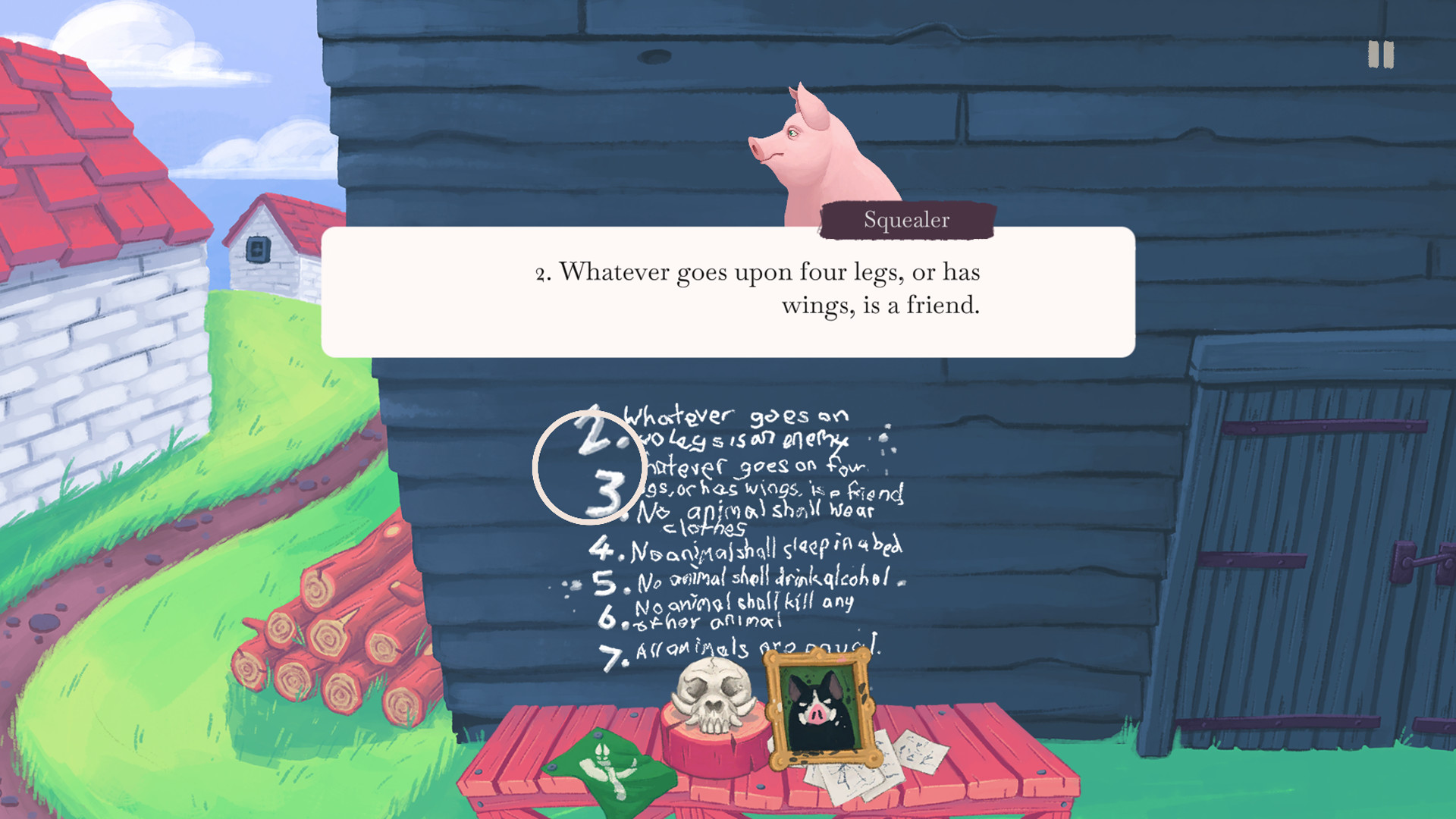
Well, happy new year everyone.
I wanted to start 2021 off by talking about an incredibly satisfying gaming experience I had over Christmas. Playing Animal Farm on my phone.
For those that don’t know, Animal Farm is a very stark book written by George Orwell in the 1940s that uses power struggles between farm animals as an allegory for the rise of Stalin and Communism in the early 1900s. It is a classic, but may not be on many peoples radars these days – unless it is a school text! Like his other classic 1984, it is a story that feels a bit too close to our current political climate – with plenty of warnings about what can happen when people choose power over people.
At the end of last year, The Dairymen Ltd. published a game based on the book. Developed by Nerial, Animal Farm is a clever and deeply engrossing retelling of the original story. Playing like a mix of choose your own adventure style storytelling and a resource management game, you get to decide the fate of Animal Farm.
Depending on your choices throughout, the game swings from following the core narrative of the original, to forging its own path into new stories that feel as if they had been written by Orwell himself. It is so seamless that you never really feel you are straying from the original story, even though you obviously are!
As a game, it is not all that complicated. Read text, make a choice, repeat. There are plenty of secrets, medals, easter eggs and endings to be found, but the gameplay is not what makes this shine. It is the way the story is told and how important your role as the storyteller feels. I’ve played the game through five or six times, and whilst there is repetition, the choices I make each time make the story feel fresh and new.
It proves that you don’t need to make a big flashy game to make a game that is engrossing and enjoyable. It shows that storytelling is really key. It also works as a master class in how to bring classic literature to life for a new generation.
If you are into serious games, gamification or any other related topic, I put this up with games like Home, Edith Finch, 80 Days and Fire Watch as an essential game to play to get a deeper understanding of how to tell non-linear stories with style and expertise.
Go to https://animalfarmgame.com/ to find out how to get a copy. Off you go, treat yourself!!
Amazing Interactive Mind Map For The User Type Hexad

This is really cool. I didn’t make it either, Sinan Sensivas did.
It is an interactive mind map of my Hexad and game mechanics. It’s really fun and an interesting way to learn it all.
Take a look and say hi to Sinan on Twitter