Stop Using Flow as an Objective in Gamification

Knot 1561626984 Stop Using Flow as an Objective in Gamification

In gamification, we (I) talk about flow all the time. But, as I have explained in previous posts, it isn’t really flow that we are speaking about in its truest for – rather balance. The fine line between challenge and ability, where a player might find themselves stretched but not in a position where the challenge is impossible (or boringly easy).

As a very quick reminder, Flow is a state that Mihály Csíkszentmihályi wrote about in his book “Flow: The Psychology of Optimal Experience [1]”. It is a state in which everything is perfectly balanced, skill, challenge, concentration and more. Time seems to stand still, the world around you evaporates – it is just you and the task. Read More ...

Progress: My Desert Island Gamification Element

Progress Progress My Desert Island Gamification Element

You want to use gamification as part of a solution you are building, but resources are limited and you can’t take a fully gamified approach. What is the one gamification element that you would insist was included, no matter what?

For me, it would be progress.

Start with Goals

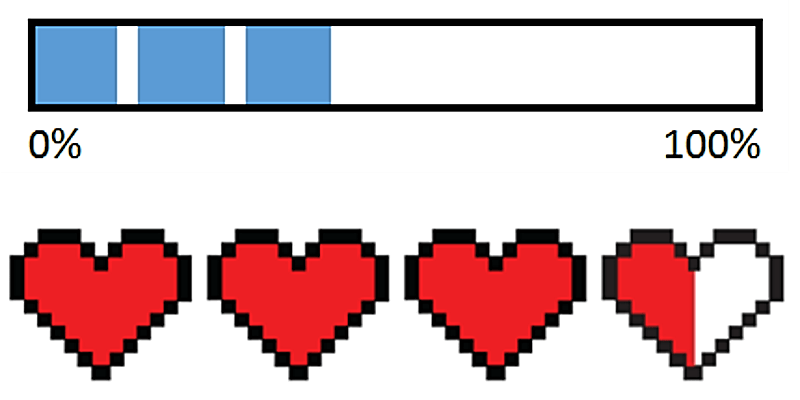
This is not a single element, so this may be a bit of a cheat. Progress is linked to two main concepts. Goals and Feedback, something I spoke about at length in Part 5 of my Introduction to Gamification (which I will return to writing very soon!). So to include progress in a design, I need to be able to create goals for the user. As I mention in the linked article, these can be large goals that are then broken down into smaller goals: Read More ...

The Piano Staircase isn’t Gamification – But That’s Okay!

Piano stairs The Piano Staircase isn 8217 t Gamification 8211 But That 8217 s Okay

There are many examples that get rolled out again and again when it comes to gamification. Several of them come from an experiment that Volkswagen did a few years ago called The Fun Theory. Two very popular ones where the Speed Camera Lottery and the Piano Staircase.

The idea behind the staircase was to see if people would use the stairs rather than the escalator next to it. And, unsurprisingly, the number of people using the staircase did increase. Sadly, the experiment didn’t’ last very long, so it was not possible to understand if this was just due to novelty. Also, there are no statistics on how many people’s behaviour was changed to the point they continued to take the stairs after the piano was removed. Read More ...

Learning from Games: Escapism

Escapism 1559724120 Learning from Games Escapism

As gamification practitioners, we are looking to utilise things that games do really well in areas that could desperately do with being more engaging in some way.

I read somewhere recently that “in games, we are trying to become our best selves” or something similar. I have to say, I only partially agree with that. In some games that is true, but most of the time I am trying to forget who I am and be someone totally different, be they better or worse than the real me. In reality, many games bring out the worst in people as a sort of catharsis! For me, I want to escape from reality, and that is the point. Games provide a way to escape the reality of life. That is why the concept of Uncanny Valley exists, where something that isn’t alive looks uncomfortably close to real. It makes us uneasy. Read More ...

The Fearification of Fun

Big brother 1558624160 The Fearification of Fun

I recently read about a large online outlet who had introduced “Gamification” into the workforce. The idea was that by doing activities that the company felt were correct and efficient, the employee would earn points. Those points in some way affected the “games” they had created.

On the face of it, that sounds ok. However, when you dig down to the motivations of the company and really start to think about what it means – it starts to sound much less enjoyable for the workers. Read More ...