

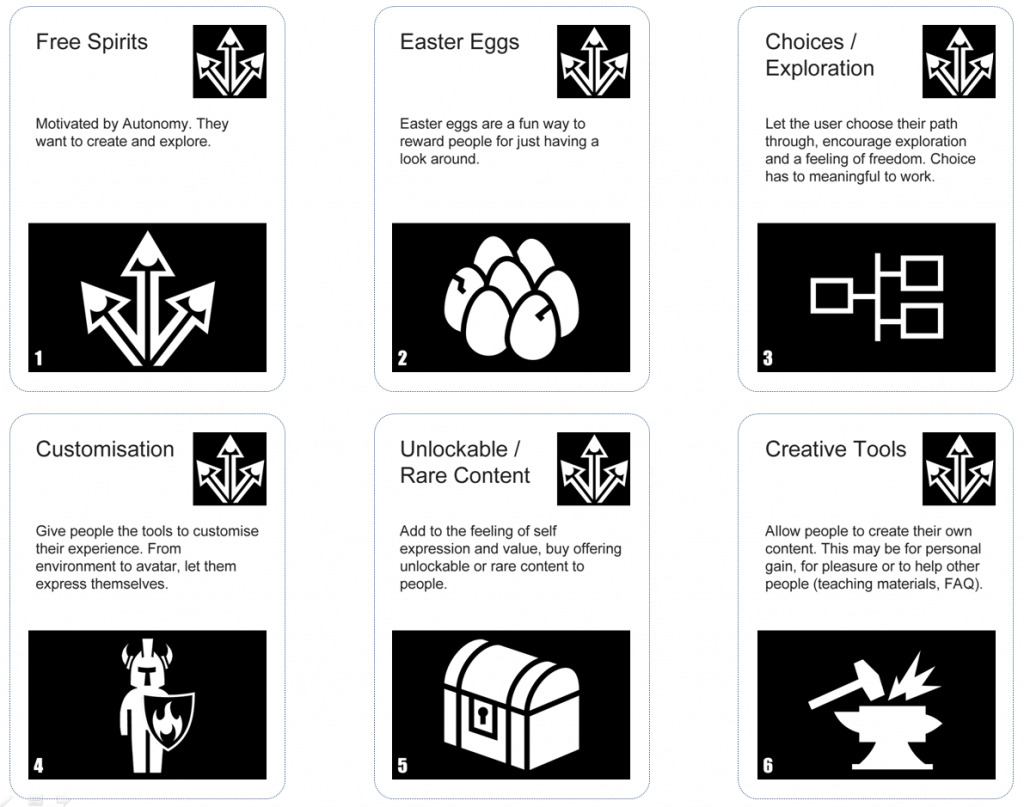
I mentioned that I was trying to simplify and improve my gamification user types. Version 2 is just that and a little more. After more research and the results of mine and others surveys on the matter, I have realised a few things. The four basic types; Achiever, Socialiser, Philanthropist and Free Spirit are all fine. They work and can be left exactly as they are. I am also happy that the extrinsic types (Consumer, Networker, Self Seeker and Exploiter) are ok, however – they have caused a lot of confusion with people. I made everything a little too black and white – it was as if people saw my intrinsic types and extrinsic types as good and evil!
Gamification
Designing a simple “Thin Layer” gamified system.

I thought this week, after 2 years of avoiding it, I would write a short starter for actually creating a gamified system. This will cover the basics of what I call a Thin Layer system – also known as PBL (Points, Badges and Leaderboards) system.
Now, before you all shout at me for explaining how to do a system that I can often be heard saying is not the best type of gamification, consider this. Thin Layer is the most common type of system out there and it is the easiest to start with. It can also be very effective over short periods of time, for things like short campaigns, education and on boarding into deeper systems. The point is (as Kris Duggan from Badgeville once pointed out to me), sometimes, something is better than nothing, as long as it is well designed and created for a purpose. My view is, of you are going to try – you should at least be armed with the right information to make the best go of it possible.
User Types Test: Stats and conclusions

Since I first launched my User Types nearly a year ago, I have had lots of great feedback, interesting criticism and a few changes of heart here and there. I have tried to evolve the types and add detail to them, in an attempt to help other people make use of them. The goal was to create a usable framework to help you plan and build gamified systems by identifying a few basic types of users and how to engage them.
Along the way, I seem to have actually made it too complex for many – something than 1.5 tries do deal with (a little). It is also based in part on the stats I have collected from the User Types test that has been running for many months now. So first, some stats.
Game Thinking – Breaking it Down


Ever since I first started considering Game Thinking, I have been trying to come up with a way to break down all of the parts that make it up. The first attempt was my article about the differences between serious games and gamification. This gave me a basic outline of the 4 areas I considered to make up Game Thinking.
Since then, I have been thinking about this a lot. I have been trying to break it down even further. The next step was my article on the term serious games. This broke serious games up into 4 basic types. Teaching Games, Simulations, Meaningful games and Purposeful games.
Career 2.0 Gamification of a Career – GWC Talk

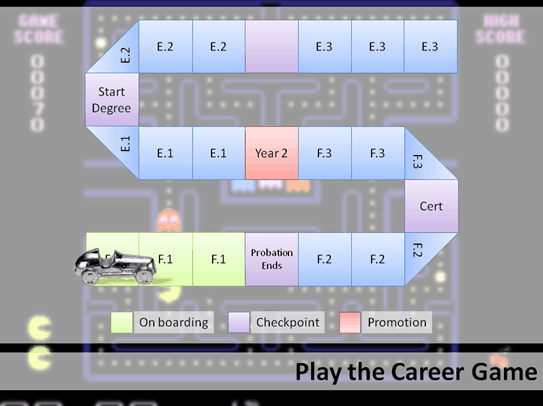
To start this week off, a written version of my presentation at Gamification World Congress earlier this year. There will be another post later this week on Game Thinking, but I wanted to give you something for your Monday morning gamification fix 🙂
Here is the full talk!

Career 1.0
The general flow of a career has remained unchanged for decades. The issue is that the workforce has changed dramatically, especially in the last ten years! What follows is a quick exploration of the current state of a career (Career 1.0) and then a look at how we can begin to improve things (Career 2.0)