The 3 Layers of Motivation 2018 Edition

Layers of motivation 2017 The 3 Layers of Motivation 2018 Edition

Ok, so it isn’t quite 2018, but near enough!

I wanted to present a new graphic for my Layers of Motivation (Found here), with a little bit of explanation about one aspect!

For those that don’t know, this was created as a way to explain where purely extrinsic and trivial methods of motivating people, such as points badges and leaderboards, sat within general motivation.

Based on good old Maslow’s Hierarchy of Needs, Self Determination Theory, my own RAMP and gamification mechanics.

The key learning is that to engage and motivate users, you need to understand what their needs are. If they are starving, offering them digital badges won’t really hold any motivational drive for them! If they are generally satisfied in their day today base needs but are unhappy in their role because they lack autonomy, adding a leaderboard to their day job will not help! Read More ...

The Danger of Solutioneering

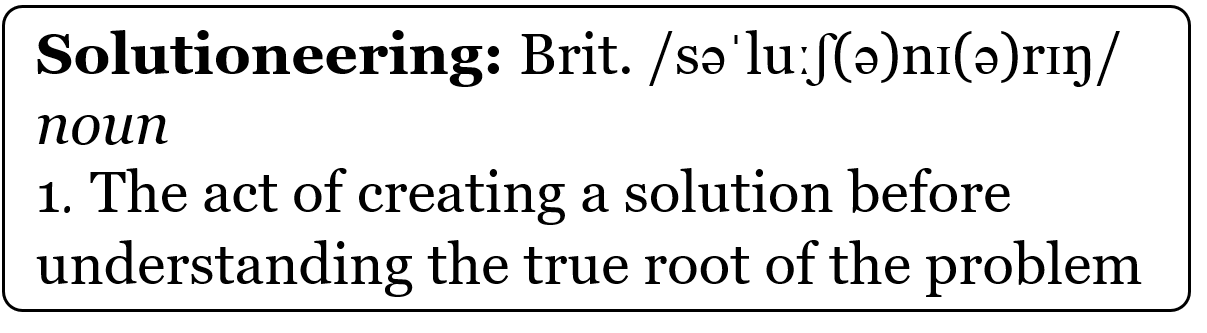
Solutioneering The Danger of Solutioneering

As with any new (ish) concept, gamification suffers from a great deal of misunderstanding in the public. As such people often don’t understand what they are asking for when they say “We want gamification”. To some, that might mean “We want a game”, to others it may be “We want to inject some game mechanics to help with motivation.”

This puts the gamification designer in a difficult position, because very often the first thing the client asks for, may not be what they actually want or need. I spoke about having what you want vs what you need a while back and it is incredibly important to understand the difference! Read More ...

Guest Post: Storytelling and gamification in education

Once upon a time 719174 1280 Guest Post Storytelling and gamification in education

Today I am excited to be able to publish a guest post from a good friend of mine, Rob Alvarez Bucholska. We speak regularly and he is a great gamification educator. Here he speaks about how he uses storytelling in materials he creates for the IE Business School in Madrid. Enjoy!

****

A while ago, Andrzej Marczewski wrote “6 Tips for Short Term Gamification“, and there is one that stood out for me because of my experience creating interactive learning materials at IE Business School. As you might guess from the title it is about narrative and storytelling. What I’ve done in the past are learning materials that, purposefully, are short bursts of learning for students. They are designed to be completed in 90 minutes or less. If you consider the typical gamified product, where you are normally looking for medium to long-term engagement, it is easy to see that there might be many strategies that don’t apply here. Read More ...

Speaking at Gamification Europe 2017

Gamificationeurope2017logo 1 Speaking at Gamification Europe 2017

For those of you who are interested in gamification events and live in the UK or indeed Europe, November the 278h-29th should be pretty exciting for you. The first edition of Gamification Europe is happening in Brighton and the line-up is looking excellent! You will get to hear from the likes of Marigo Ruftopolous, Michael Wu, An Coppens and of course me!

If you want to attend the conference, you can register at the Gamification Europe website. Use the code GE25AM to get a 25% discount. https://www.eventbrite.co.uk/e/gamification-europe-registration-38868140655 Read More ...

Play Games, Enjoy Games and be a Better Gamification Designer

Video game 2154473 Play Games Enjoy Games and be a Better Gamification Designer

Over the year my opinion on the need to love games to be a good gamification designer has fluctuated. In the early days, I was more flexible on the idea. It was all about psychology in a nearly pure form, understand behaviour and use that understanding to encourage the behaviours that you want. The “game” aspect was less important as gamification is not making games!

However, as I work on more and more projects it becomes clear that this is rubbish. Anything beyond the most simple of applications of gamification needs a solid understanding of games. It is not necessary to be a games designer as such, but having a good idea of what makes games work is an essential. If I was not a gamer, I would not be able to do my job at this level! I would have no inspiration for a start. After that, I would have no idea what worked and why. Finally, I would not have the love of play that is so desperately needed in good gamification implementations. Read More ...