

A few side projects and stuff for you to enjoy.
Gaming
Really Simple Gamification – Randomness
Recently my daughter decided to start her YouTube videos again. Previously she had been doing “opening” videos, where she opened toys nod spoke about them. However, now she wanted to do some more fun spots, with challenges. Her first idea was “The Hot Sauce Challenge”. Basically, eat a spoon of really hot sauce and record the funny reaction. The trouble with that though, it’s not much fun.
One of my favourite definitions of games revolves around deliberately putting obstacles n the way of tasks. The basic idea of eating hot sauce is very simple. However, if you add an obstacle, say an element of randomness, you start to form a game.
Learning From Games: Battlefield 1, RAMP, User Types and Awesome Gaming

Over Christmas, I started to play Battlefield 1, a game that I was especially looking forward to given my love of the series. I’ve not had as much time to play video games as I would have liked over the last 12 months, so I’ve been making the most of this opportunity. I may even review it for my old and neglected games review site http://yetanotherreviewsite.co.uk!
Anyway, back on topic. I’ve always loved the series because of how good the multiplayer experience is. Back when Battlefield 1942 first came out it broke the mould by not even bothering with a single player game, a brave and clever move as it turned out. It also put a much tighter focus on teamwork with its “Conquest” mode. This saw teams holding key strategic points on the map for as long as possible. Achieving this required good balance of character classes and a level of teamwork beyond just rushing off and killing things.
Exploring the Meta-Rules of Play
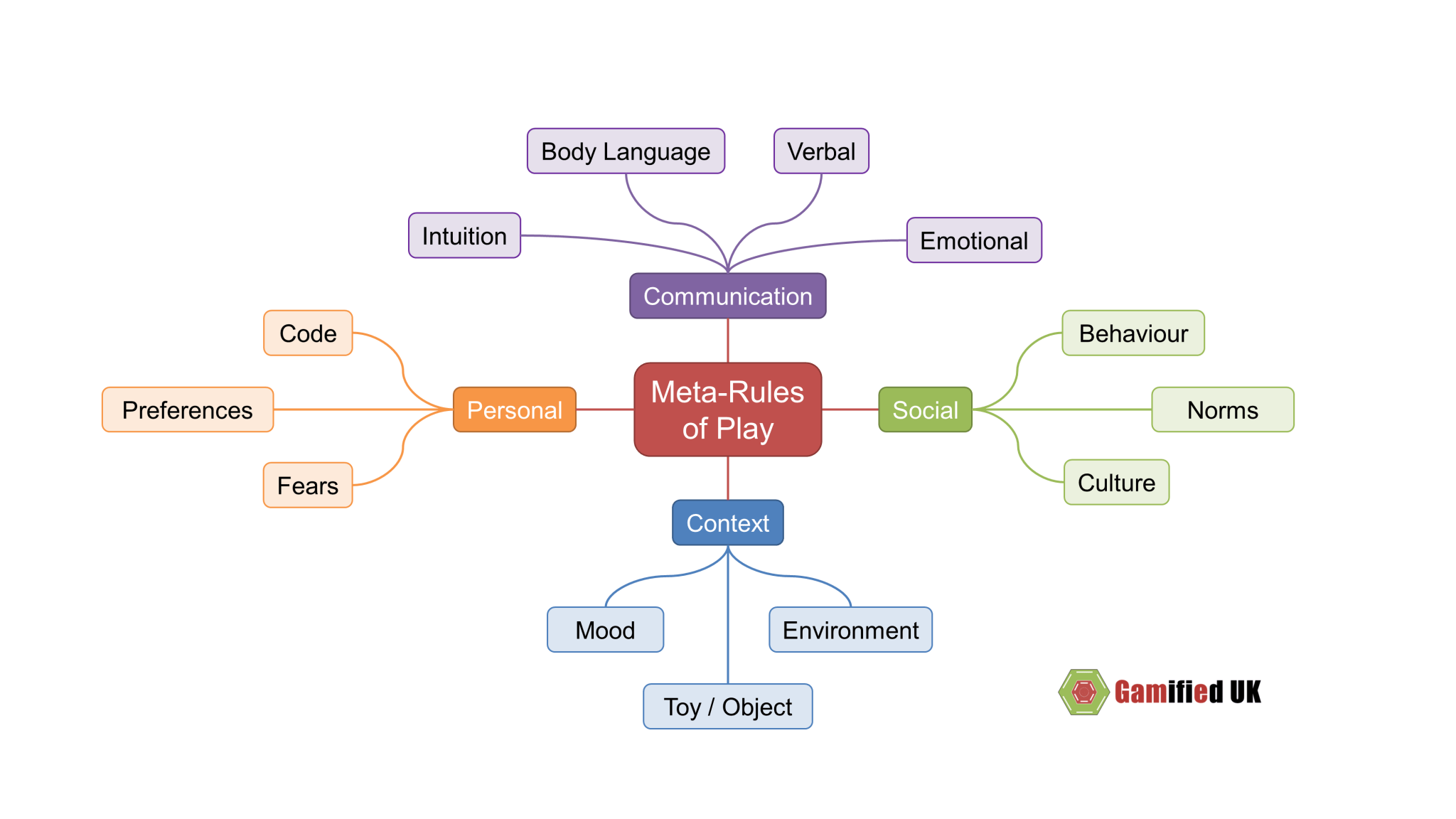
In my last blog, I introduced the concept of Meta-Rules. These were the non-system or inherent rules that actually guide how people play.
I spoke about them rather abstractly, describing them in the following way
These [meta-rules] rules are beyond what you would consider written or system imposed rules. These are fluid rules that can change moment by moment. These are the rules that define how play unfolds. These are the unspoken rules that children manage to communicate to each other when they are playing, where the situation is constantly changing, but they always seem to be able to adapt to the changes without fuss
Playing with Thought Experiments and Meta-Rules

No great insights into gamification in this post, more me revisiting play, toys and games – again. When I need to clear my mind of clutter, I tend to consider the nature of play. That is probably why I write about it so much! I doodle about it on the plane, at night, when I have time to kill. I always come back to play. Dutch, a friend of mine in the gamification world likened it to Einstein’s “thought experiments”. Of course, I am not comparing myself to Einstein. The only things we have / had in common is dyslexia and a love (at one time) of physics.