
Gamification is sh1t. Let’s make it better.

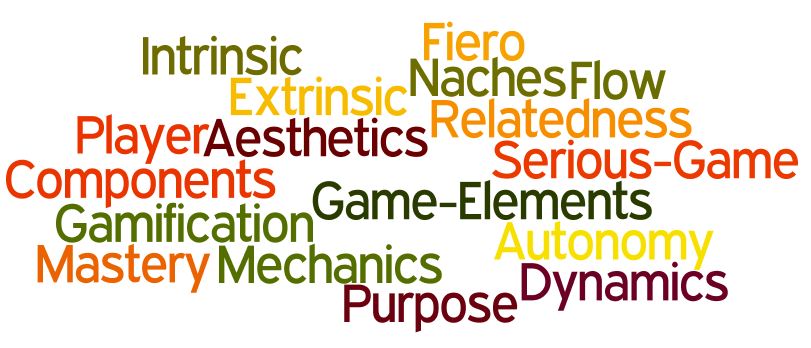
Gamification glossary Gamification is sh1t Let 8217 s make it better

I thought that might get your attention. Excuse the contrived use of the 1 in shit there as well, firewalls can be so jumpy about certain words.

Now back to my point.

Gamification, in far too many cases right now,  is indeed shit. I am not saying gamification itself is bad, just a lot of the uses and applications of gamification that we are seeing out there falls into that particularly odorous category.

It’s as if gamification has become the duct tape of user design. “The user experience is a bit off, what should we do? Add gamification”. “The system is not great, people get stuck and don’t like using it, what should we do? Add gamification – points and badges will fix it!”. “We need to improve efficiency in the department. How can we do that? A leaderboard you say? Let’s do it!” Read More ...
Losing the game of life

Robotc 665x285 Losing the game of life

I was thinking how depressing life is recently. Hear me out!

We are an evolved species, we can think and act for ourselves. We have reached a point where we no longer have to hunt for food or build our own shelters (unless we choose to or in certain cases of poverty – you know what I mean though). We have cars and computers and a world connected in ways that we could never have imagined. We live longer, are healthier and more productive than ever before.

However, this has come at an extremely high price. The more “evolved” we become, the more ridiculous we have become. Read More ...

Put up or Shut up and stop moaning about gamification.

Spiral hypnosis Put up or Shut up and stop moaning about gamification

So, for my final post of the week (as I seem to have subconsciously challenged myself to blog all week), I want to throw a curve ball out there. If I am honest it is a brain dump and a rant. So strap in and enjoy the ride.

I have talked about gamification being a benign form of manipulation in the past.  I don’t think anyone within gamification who has any sense will disagree, gamification is manipulative. It is manipulative in the same way as marketing, or parenting. It is manipulative in the same way that society manipulates you on a day to day basis to go to work every day. Our society has been built on the idea that we should all be doing something. For some that is moving paper around. For others it is making the moving of paper more efficient.  For very few people is it anything truly meaningful. If we are honest, very few jobs are meaningful. We are not all doctors or nurses or fire-fighters or teachers etc. We work to pay tax, to buy food and because that is what we are told to do. Read More ...

Why I use Thin Layer Gamification on my Blog

Jumping captain a6e261d2babd6e4c4b8e35863578477e Why I use Thin Layer Gamification on my Blog

One of the things I have been asked on occasion is why I have included the Captain Up gamification platform on my blog. In my own words, I would describe it as “Short Term, Thin Layer” gamification (something I will elaborate on in a future blog). A layer of veneer that has little or no long-term engagement possibilities. The reason is because I wanted to. Simple as that. I thought that some people who read my blog may find it a bit of fun – short term or not. I have a few hidden Easter egg style rewards on there, but for the most part is a vanilla install that people can play if they like or ignore if they choose. Read More ...

What is a game or Why There is a Time and a Place for Philosophical Debates.

Rules rule What is a game or Why There is a Time and a Place for Philosophical Debates

After my last item about serious games (Too Broad a Term to be Meaningful), one topic of debate came up. How can we determine if the term Serious Games is too broad, if we don’t really understand what games are?

I have looked into this question before and it has to be said, at an academic and philosophical level – it is muddy as hell. Generally it is accepted that a game is structure play (where play is free from form and rules). Here are a few definitions (taken mostly from Wikipedia).

Philosopher Ludwig Wittgenstein is often cited as discussing games in great detail in his book “Philosophical Investigations” in 1953. The simplest quote i can find about his view (that may well be paraphrased!) was Read More ...