

One of the cool things about working in gamification is having access to some very cool and very intelligent people! One of those is a chap by the name of Carl Eacott. We met on Twitter some time ago and then months later discovered we lived on the same street. Since then, I have ended up working in the same company and to save the planet, we car share. The awesome thing about this is I get 2 hours a day to speak to a genuine work psychologist. It has been hugely interesting and has led to many “Ah-Hah!” moments. One of those was the idea of using my User Types HEXAD as a series of lenses rather than specific set in stone types.
4 Simple Questions To Transform Your Gamification Implementation
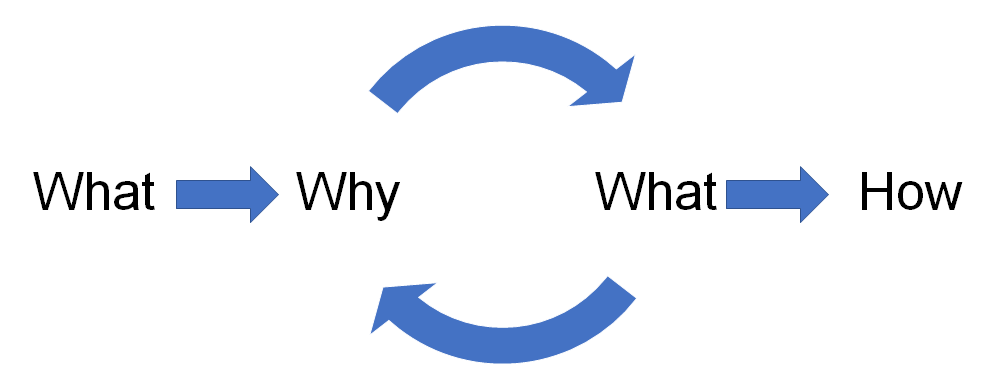
It is simple to jump to solutioneering as soon as you feel you have a problem that needs fixing. However, taking a step back and asking 4 simple questions can save you time and money in the long run.
- “What is the problem”
- “Why do we need to fix it”
- “What needs to change to fix it”
- “How do we do that”
What is the problem?
First, you need to explore What you are wanting to change. This is the easy bit and is likely to change, but it is a start. Be as specific as you can, but be open minded as you explore further!
Most people already have this in mind when they first go to someone asking for gamification.
Why do we need to fix it?
I have spoken about this in the past, but it is so important that I like to bring it up from time to time.
A couple of short stories

I thought I would share a couple of “Near Future” short stories I have written recently with you. Hope you enjoy them 🙂
Review: Eating Robots by Stephen Oram

For openness, I was sent a copy of the book to review.
A rare book review from me. Every now and again, thanks to previously running a review site, I get asked to review stuff. In this case, it was a book of short stories titled Eating Robots and other stories, by the author Stephen Oram.
I love dystopian stories, having even written several myself in the past. For me the future is anything but bright, depending on how you look at it. One of the best representations of using this dystopian “lens” has always been the T.V. series Black Mirror from the brilliant Charlie Brooker.
Her Story, Gone Home and Narrative Atoms

Last week I wrote about Narrative Atoms in some details. They are basically small nuggets of narrative that can stand on their own but together build the bigger story.
Two obvious examples that I totally forgot about are the game / narrative experiences of Her Story and Gone Home.
Her Story is the fabulous creation of Sam Barlow. You take the role of investigator, reviewing a police archive of video footage of a British woman accused of murder. You can access the footage in any order you like, gleaning more clues and information with every video you watch. Sometimes the videos will not make sense until you find the video that came before it, others give you all you need in just a few seconds of footage. The joy is discovering how the story fits together, jumping back and forward through the timeline. New snippets of information give you new ideas on what to search in the archive, leading to many “Ahahaa” moments.