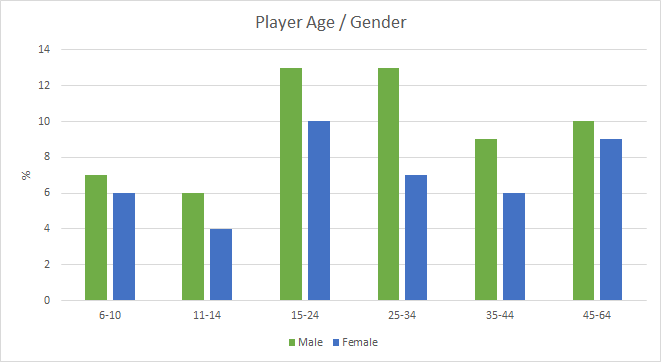
I’m Too Busy and Important to Play Games

Player stats I 8217 m Too Busy and Important to Play Games

Everyone who is involved in gamification has hit this same problem, someone who thinks they are just too busy or important to play games. You are in a meeting, selling gamification like a bad ass and you get hit with a comment like “I don’t like games” or “My employees are busy and important, they won’t want to play games”.

It stops you in your tracks. Your funky coloured trousers and gamification issue converse and hoody seem suddenly childish, your theme and mini games feel unimportant and you start to doubt the point of gamification at all. Talk of millennials and the need to engage them in different ways begins, but this company is full of 50-year-olds so that matters not. Games just have no place in the real world. Every preprogrammed gamification response is met with the same look of disdain. Read More ...

Gamification User Types HEXAD Validation Study

1 O5FClRZSTMg4sSlO5WyJkA Gamification User Types HEXAD Validation Study

I thought it would be good to finally show you all the research results from Austrian Institute of Technology and HCI Games Group, Games Institute, University of Waterloo and of course Gamified UK around the User Types and the survey.

The link below will take you to a blog written by one of the researchers, Gustavo Tondello, who explains it all better than I can!

https://medium.com/@hcigamesgroup/the-gamification-user-types-hexad-scale-a6d8727d201e

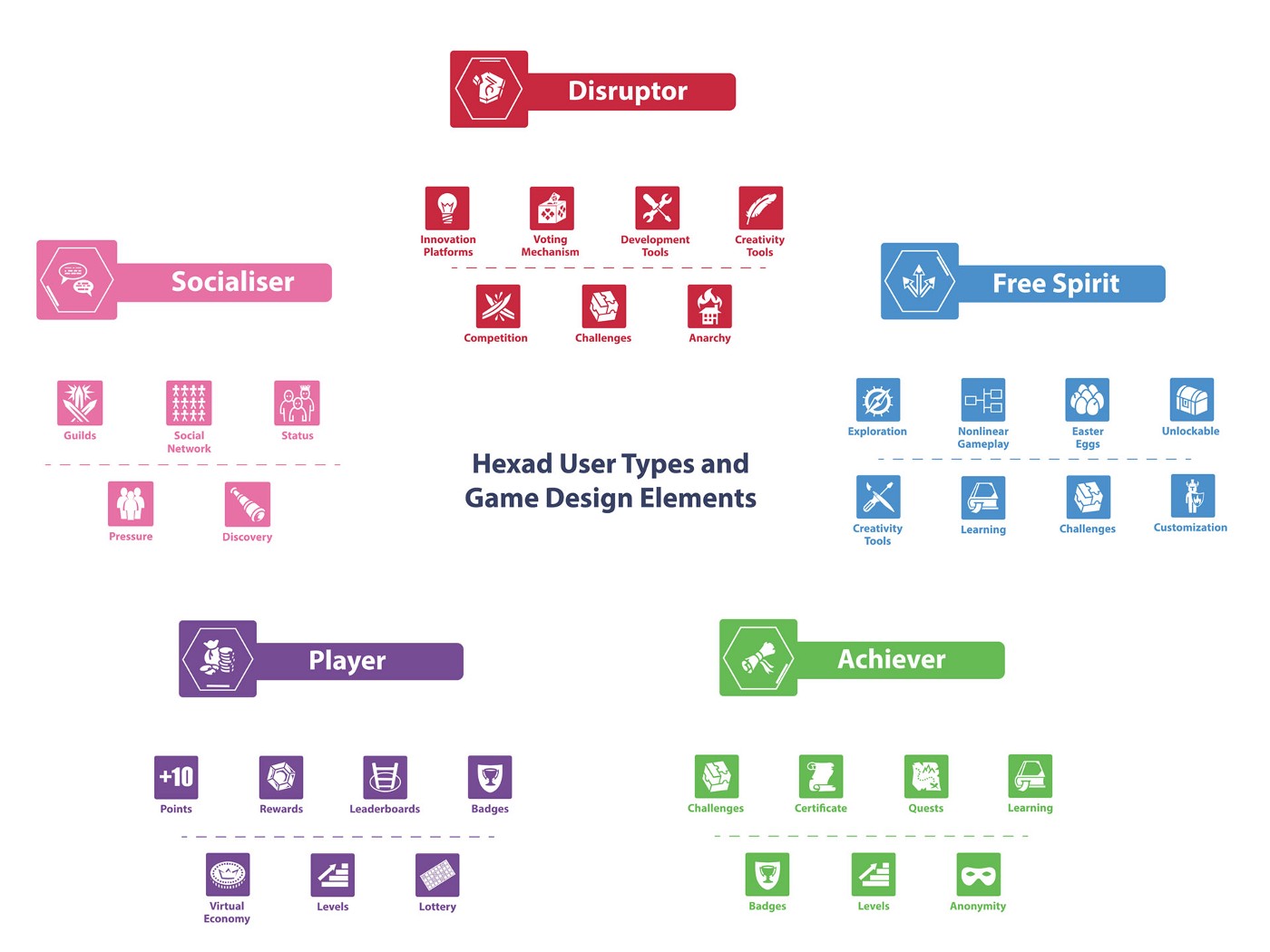
Several studies have indicated the need for personalising gamified systems to users’ personalities. However, mapping user personality onto design elements is difficult. To address this problem, Marczewski developed the Gamification User Types Hexad framework, based on research on human motivation, player types, and practical design experience. He also suggested different game design elements that may support different user types. However, until now we were still lacking a standard assessment tool for user’s preferences based on the Hexad framework. There was also no empirical validation, yet, that associated Hexad user types and game design elements. A collaborative research project by the HCI Games Group, the Austrian Institute of Technology, and Gamified UK sought to accomplish these two goals: (1) create and validate a standard survey to assess an individual’s Hexad user type and (2) verify the association between the Hexad user types and the game design elements they are supposed to appeal to. Read More ...

10 Top Gamification Tips – And A Question

10 gamification tips 10 Top Gamification Tips 8211 And A Question

Hi there you lovely, lovely gamification enthusiasts! First off, I wanted to collate 10 tips for gamification greatness that I published on Twitter not long ago. Keep these in mind and you are destined for great things… probably.

  1. Recognise don’t bribe.
  2. Challenge don’t patronise.
  3. Focus on solving the problem not on forcing fun.
  4. Record everything you can, but be sure to define clear metrics to measure success and failure.
  5. The rules of the system need to give everyone the same opportunities to thrive.
  6. Let people fail, but make sure they can learn from it.
  7. Gamification should enhance, not annoy.
  8. Bring your solution together with a strong theme and narrative.
  9. Collaboration will encourage a more diverse group of players and deeper engagement than pure competition.
  10. Gamification should be an intrinsic part of the design, not an aesthetic afterthought.

Secondly, I am starting a new book and have a question for you. It is a companion book for Even Ninja Monkeys Like to Play, focusing on the practical aspects of gamification. It is going to be shorter and will have less of an academic feel (don’t look for  along citation page at the end). Read More ...

Making a Free To Play (F2P) Strategy That Doesn’t Suck

Money 1473160882 Making a Free To Play F2P Strategy That Doesn 8217 t Suck

As a parent, Free To Play (F2P) games are the joy and bane of my life in equal measure. Kids these days seem to be near impossible to entertain for any length of time. This being the case, video games are like comics were in my day – plentiful and cheap, especially on mobile platforms. Unlike comics, many games now present themselves as free.

Free is a tough term, though, like anyone games developers need to make money. So games that seem to be free on the App Store, tend to be Free to Play. The concept of F2P is that the game can be played for free, but you can pay for certain features. Read More ...

Fun and Gamification?

Uni1 Fun and Gamification

Often when people talk about gamification, they speak about adding fun to everyday work related tasks. The whole Mary Poppins “A Spoonful of Sugar” analogy pops up regularly.  Anyone who has stuck with this blog for a while will know exactly how I feel about her…

The trouble with fun is how you define it. The Oxford dictionary (thanks Google), goes with

Enjoyment, amusement, or light-hearted pleasure: the children were having fun in the play area

Now, I’ve said this before, but it is worth saying again – fun is subjective. What you find fun, I may not. Consider the following event. Read More ...