What is a game or Why There is a Time and a Place for Philosophical Debates.

Rules rule What is a game or Why There is a Time and a Place for Philosophical Debates

After my last item about serious games (Too Broad a Term to be Meaningful), one topic of debate came up. How can we determine if the term Serious Games is too broad, if we don’t really understand what games are?

I have looked into this question before and it has to be said, at an academic and philosophical level – it is muddy as hell. Generally it is accepted that a game is structure play (where play is free from form and rules). Here are a few definitions (taken mostly from Wikipedia).

Philosopher Ludwig Wittgenstein is often cited as discussing games in great detail in his book “Philosophical Investigations” in 1953. The simplest quote i can find about his view (that may well be paraphrased!) was Read More ...

Serious Games: Too Broad a Term to be Meaningful

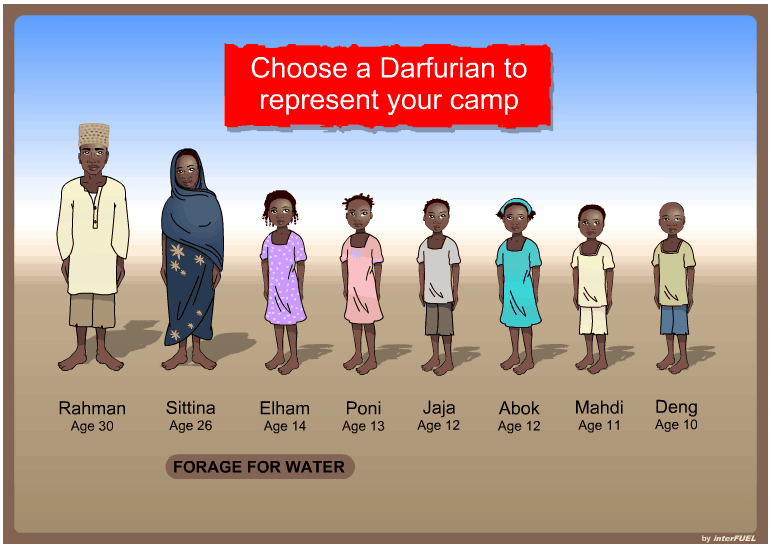
Darfur is dying Serious Games Too Broad a Term to be Meaningful

A while back, I wrote a piece on the difference between serious games, games and gamification. It was simple, but covered the important areas of what makes them different from each other.  Since then, I have had more involvement with serious games (recently helped as one of the judges for the Serious Play Awards for instance) and it has started to dawn on me that we are still confused as to what they actually are.

Yesterday, Mattie Brice posted the following on twitter

Hey y’all, tell me the most popular serious games you know of Read More ...

Disruptors: My Negative User Type

Alfred Disruptors My Negative User Type

One of the questions I get asked about when people see my User Types, “What about Killers?” Now I have spoken about the Bartle Killer type and why I don’t really account for them in the types. In a nutshell, Killers want to destroy and humiliate other players in MMO’s. This is not a behaviour we are trying to build for in gamificaiton and as my User Types are written to help give ideas and structure for designing systems – they didn’t really have a place. This is especially in enterprise gamificaiton where this type would be handled with internal policy! Read More ...

Intrinsic and Extrinsic Motivation

20130212 081506 Intrinsic and Extrinsic Motivation

One of the most tedious arguments in gamification is that of Intrinsic Motivation vs. Extrinsic Motivation . Not only is it tedious, it is also one of the most written about topics on the web relating to gamification and is one of the main reasons people cite when they tell you why they think gamification is rubbish. They feel that all gamifiers rely too much on extrinsic motivators.

I have tackled this in various forms of the last 2 years, but not directly written an article mentioning those two words in the title.  As such, I am often accused of not understanding the whole argument because I sometimes say that extrinsic rewards don’t always suck.  So, here we go, oh and do a search for better articles after you read this one! Read More ...

Machinations Model of a Basic Points and Badges System

Machinations Machinations Model of a Basic Points and Badges System

Machinations of Gamification

Machinations is a fantastic game mechanics modelling tool by Joris Dorman – http://www.jorisdormans.nl/machinations/

It allows you to build an interactive model of the basic structure of many types of game and recently has been getting some attention in the world of gamification. I decided to have a quick play and just build a simple Points and Badges system. Click run, then press the Like, Share or Comment buttons to gain XP, unlock badges and increase your level. If nothing else, this will show you why this type of gamification / pointsification in isolation is so boring! Read More ...