Exploring the Player User Type – with archetypes

Player archetypes Exploring the Player User Type 8211 with archetypes

To finish off my little look at the sub-types from my User Types, I want to take a new look at the Player User Type.

I have done a deep dive on this before, but I wanted to simplify it a little.  Essentially the Player is motivated by rewards, plain and simple. They will do similar things to the intrinsically motivated group, but only if there is a reward at the end of it!

  • Self-Seeker: This group of users will act in a similar way to Philanthropists. They will answer peoples questions, share knowledge and be helpful – but for a cost. If there is no reward, don’t expect them to get involved! They can be useful, however if they are being asked to get involved for rewards, expect quantity over quality!
  • Consumer: Consumers will do what is needed to get rewards. If that requires them to learn new skills or take on challenges (like an Achiever), then they will do it. However, if they can get rewards for just doing what they were already doing – even better. Think of them as the ones who will enter competitions just for the prize or who shop at one store just for the loyalty programme.
  • Networker: Where a Socialiser connects to others because they are looking for relatedness, Networkers are looking for useful contacts that they can gain from. They follow the big influencers on social networks, not because they are interested in them, but because they hope it will get them noticed, increase their influence and lead to reward.
  • Exploiter: Like Free Spirits, these guys are looking for the boundaries of the system, where they can go and what they can do. However, for them it is a way to find new ways to rewards. If they find a loop-hole, don’t expect them to report it unless they feel others are earning more than them exploiting it! They are the most likely to exploit the system (you could say cheat!). They are also the people who will build things just to sell. Think of Second Life. Loads of people started to build things – some realised that as well as being fun, they could make some money from selling items. For a few this turned into a way of making a living. They stopped making things for fun and just made them for profit.

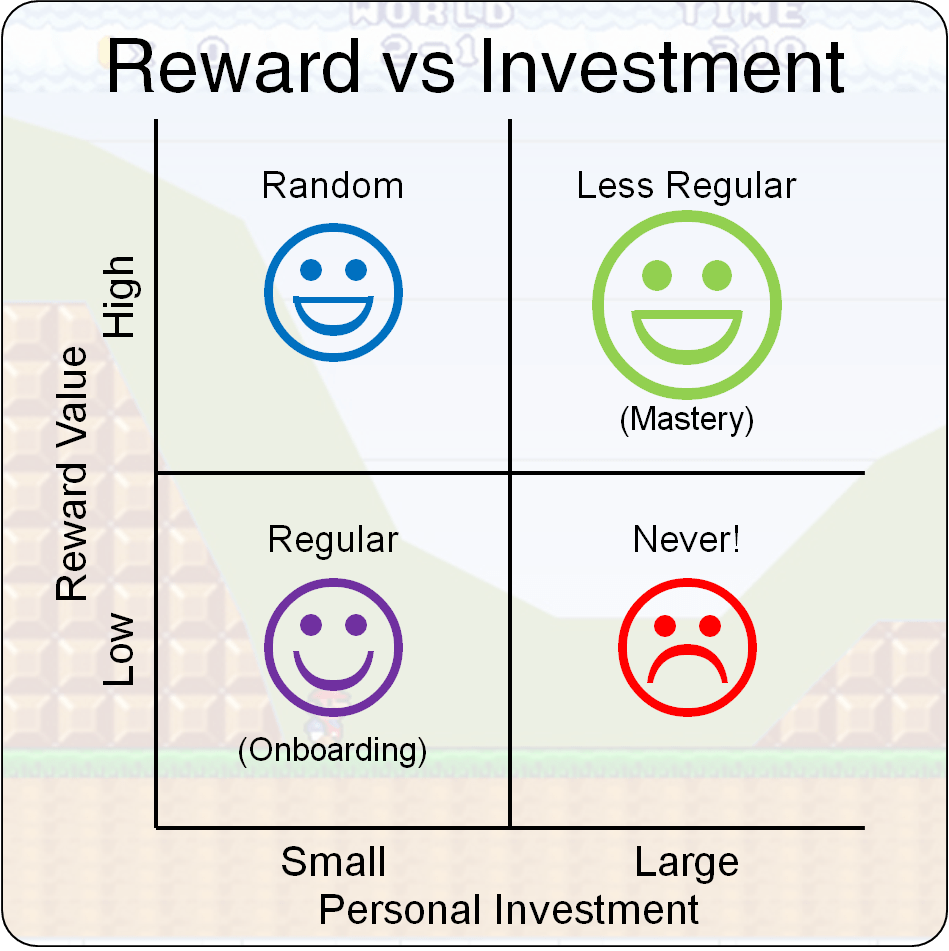
The Player User Type is important to recognise as most people coming into a gamified system are probably there initially due to rewards (points, prizes etc). The trick is to try and convert them from being reward oriented into intrinsically motivated users (Socialiser, Free Spirit, Achiever, Philanthropist). There is some evidence to show that the extrinsic types will convert to their analogous intrinsic types (so Networker -> Socialiser etc) but it is not a dead certainty in all cases. Design for the intrinsic user types that benefit your system, but include reward paths for the onboarding process for best effect and greatest coverage. Read More ...

My 3 main focuses for rewards and feedback

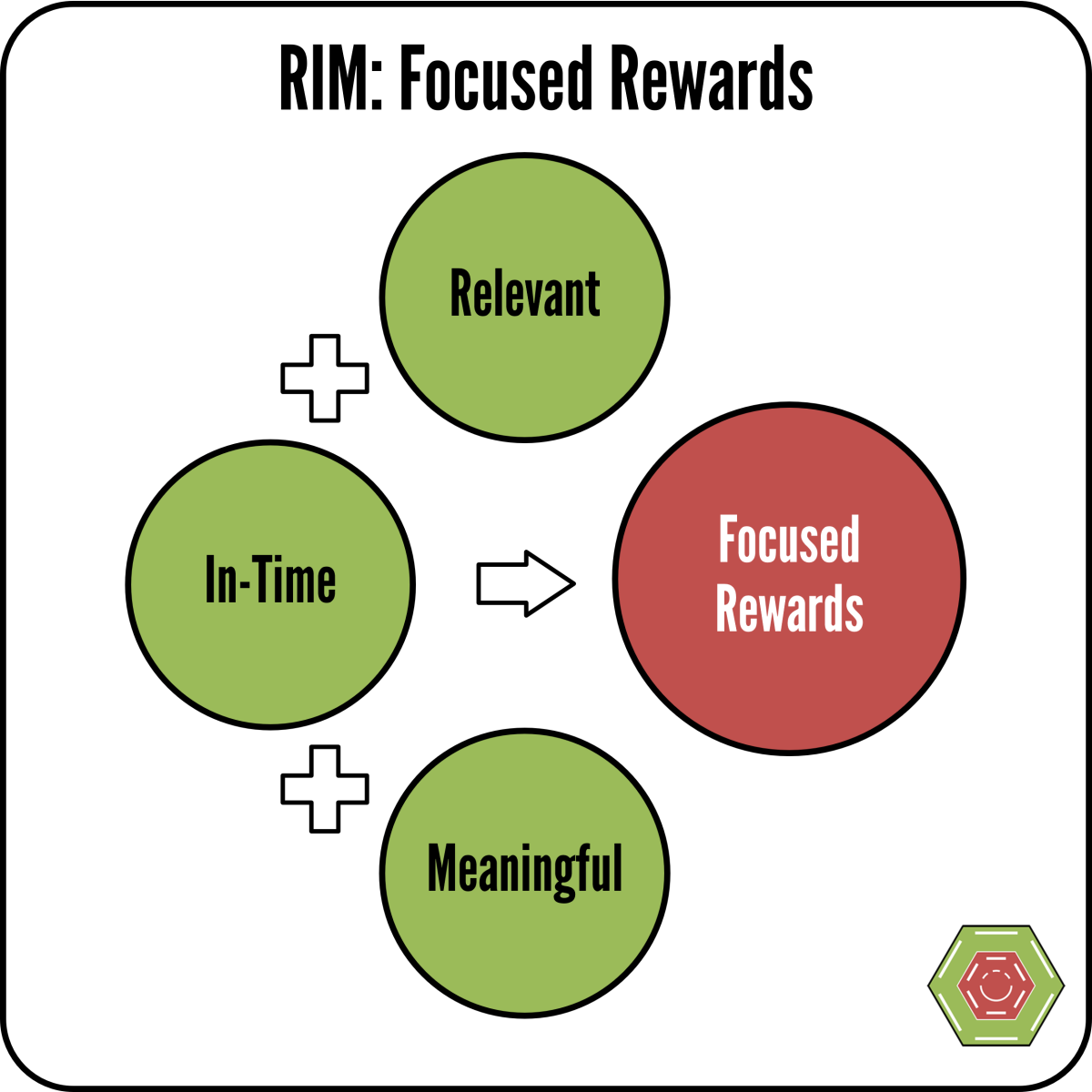
RIM My 3 main focuses for rewards and feedback

One of the key things that I consider when looking at anything in gamification is how feedback is going to be handled. For me, feedback is anything that gives a user some understanding of progress and achievement. This can be something as simple as a message that says “You have completed the survey”, to a full virtual economy working with points, badges, levels, leaderboards, trading, prizes etc! They are all just there to keep the user informed.

I feel there are three important aspects that need to be considered when designing feedback and rewards for any system though. It should be – cue another mnemonic – RIM…..! Read More ...

Just rewarding activity is not gamification: stop it!

Image Just rewarding activity is not gamification stop it

I have promised in the past not to write about the dangers of extrinsic rewards anymore. However, can’t stand reading about gamification being a failure anymore, when the articles proclaiming this almost always start with “gamification is about awarding points, or physical rewards to people for doing dull tasks”.

No quoting from Dan Pink or Deci and Ryan this time, just facts based on experience.

If you offer a reward, especially a material reward that has value to people, you are setting yourself up for failure. Every time I have seen a ‘gamified’ campaign that offers someone like an iPad as a prize for participation, it has had problems. The worst culprit is when the prize is offered for nothing more than activity (so no actual creativity needed). Read More ...

Gamification is sh1t. Let’s make it better.

Gamification glossary Gamification is sh1t Let 8217 s make it better

I thought that might get your attention. Excuse the contrived use of the 1 in shit there as well, firewalls can be so jumpy about certain words.

Now back to my point.

Gamification, in far too many cases right now,  is indeed shit. I am not saying gamification itself is bad, just a lot of the uses and applications of gamification that we are seeing out there falls into that particularly odorous category.

It’s as if gamification has become the duct tape of user design. “The user experience is a bit off, what should we do? Add gamification”. “The system is not great, people get stuck and don’t like using it, what should we do? Add gamification – points and badges will fix it!”. “We need to improve efficiency in the department. How can we do that? A leaderboard you say? Let’s do it!” Read More ...

A small gamification victory with my daughter!

Behaviour meter A small gamification victory with my daughter

Whilst I spin through a really busy time, I wanted to share with you a minor gamification victory with my daughter.

Anyone who has read my blog in the past, will know that I have been trying to use gamification around my daughters behaviour for a few years now. Not all (any) attempts have been 100% successful. The most gut wrenching failure was the use of the reward chart! However, in March, I decided to try a slightly less rewards based system – the Behaviour Meter.

This was a simple chart that displayed numbers 0 to 10, with an arrow pointing to the value that best described my daughters behaviour at the time. Whenever I felt her behaviour changed, I moved the arrow – simple! Read More ...