
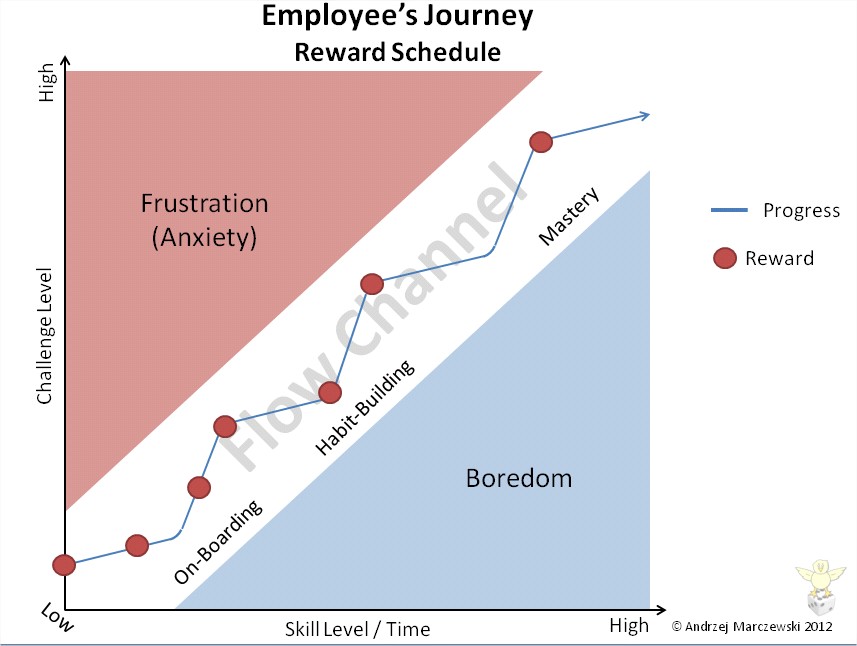
Anyone who has read a few of my blogs will, by now, be under the impression that I am not the biggest fan of rewards. Well, that is not entirely how I feel. Those that have read earlier blogs may remember something I said – “Rewards should recognise achievement, not be the achievement”. I also found myself saying in an email “Gamification at the moment is often nothing more than an attempt to illicit Pavlovian responses to external stimuli”. I know, how up myself does that sound – but it’s true. The way many people are using rewards are as a way to encourage people to do things – like giving a dog a biscuit for rolling over on command
Harry Potter and the Gamification of School

When I was a kid a school (long before Harry Potter had been thought of – and gamification for that matter…), teaching methods generally sucked. A teach stood at the front of the class, dictated out ancient notes and you had to write them down in your exercise book. If you didn’t pay attention or did something the teacher did not like, you got a board rubber thrown at your head. There was no intrinsic enjoyment to be had from the learning process; it was all drained by the way we were taught. This was not unique to my school years; it had been this way for decades.
Flow, Player Journey and Employee Satisfaction
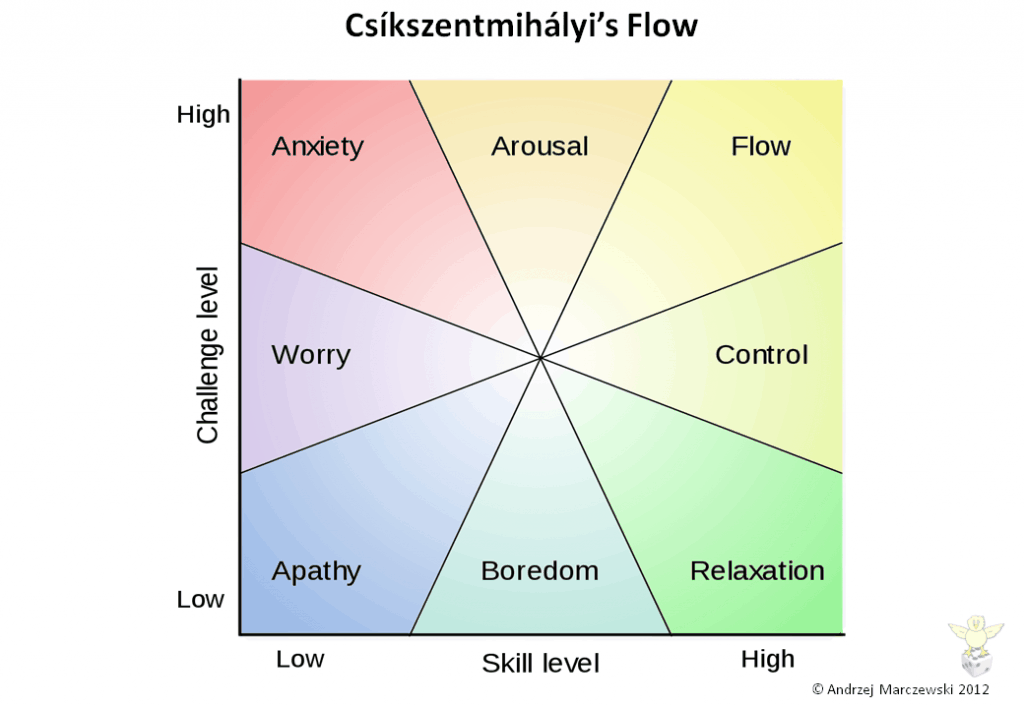
What follows is an exploration of what happens when you start to map player journeys in games onto Flow theory and then try to bring that into the workplace. Just for fun! It was inspired by Mr Scott Golas after seeing last weeks post on relatedness. It may or may not have any worth, but it has been fun to develop. Click images to see the bigger versions or you can see the presentation at SlideShare
What is Flow and what is the Player Journey?
Mihayi Csikszentmihalyi suggested the concept after seeing that under certain conditions people’s experiences became optimal. This is to say that everything around them was lost as they concentrated on the job at hand. This can be seen in many artists who just “get into the grove” as they work. Time stops, nothing else matters and when they finally come out of it, they have no concept of how long they have been working.
Relatedness: The Often Ignored Glue of Gamification

Another great conversation with my friend Scott Sinclair and another batch of inspiration for a blog. This time about why social is really the key to gamification.
Let us look at one of my favourite video games of all time, Batman: Arkham City. Without going into too much detail, you are Batman and you have to uncover a plot to take over Gotham. For me, this is one of the most complete single player experiences I have ever had.
How Does a Game Progress?
The way the game works is exactly what you would expect from a player journey. You start with very little in the way of skills and abilities. You are taught how to play the game with “on the job” nudges, hints and tutorials. Once you have the basics nailed, you are thrown into your first “boss battle”. This gives you a chance to test your new skills against a proper challenge. Once this is over, you start up the path again. New skills are added, abilities are enhanced, the story progresses and it steadily gets harder and harder. This pattern repeats – learn skills, master them, boss fight, and repeat. This continues until you have achieved a high level of mastery in the game. Then it is all about the narrative, using your new mastery to get to the end of the game and defeat the final boss.
What the NHS has just taught me about poor user experience.

Whilst I normally blog about Gamification and finding the benefits in understanding the psychology of people, this post is of a deeply personal nature. It also shows how important user experience is. I hope though, you will retweet this far and wide. Oh – and it is a bit of a rant.
This was to be a letter to our medical practice, but to be honest; I decided that it would not make any difference. The last time I tried to complain to the NHS, they seemed to think that it was perfectly acceptable to be told it was best to take my heavily pregnant wife, who was in labour and begging for help, back home. The same heavily pregnant wife who less than an hour later gave birth to our daughter, in our upstairs toilet with no one but me available to deliver her. All this whilst on hold to the same hospital as the tried to find someone to talk to me. This broke none of the their guidelines. Basic human care was apparently not high on the agenda. So rather than going that pointless route again, they will be getting a short note with the URL to this blog on it.